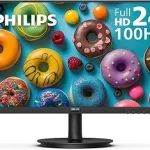
SAMSUNG 34″ ViewFinity S50GC Series Ultra-WQHD Monitor (ASIN B0C1KPXPM9)
Best Ultrawide Monitor Buying Guide — Black Friday Deals 2026
How much width will genuinely help at your desk: room for a broad game view, a large canvas for several tasks, or a way to see two inputs at once? Those are different buying goals, even when every option is called an ultrawide monitor. This guide compares three models by the details provided: screen size and shape, resolution, motion specifications, and particular viewing or connectivity features. For Black Friday, treat the listed offer as something to verify, not a reason to change your priorities. Match the exact model and variant to the setup you want, then decide whether its features fit your routine.
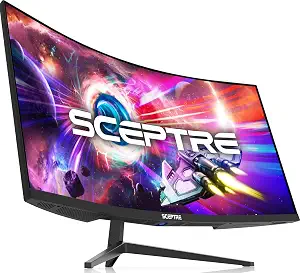
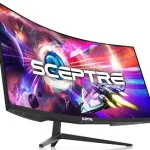
Best Budget is the editorial label for the Sceptre C345B-QUT168, a 34-inch curved ultrawide with a 21:9 aspect ratio and 3440 x 1440 resolution. Its stated format makes it a candidate for shoppers seeking a wide desktop view without stepping up to the 49-inch, 32:9 format of the Samsung Odyssey G9. That is a difference in listed size and proportions, not a judgment about price or value: no current prices or Black Friday discounts are provided here. Compare the actual offer and your workspace before deciding which format makes more sense.
The Sceptre’s motion details are a 165-hertz refresh rate and 1ms MPRT response time. Keep the response-time qualification, MPRT, in view when comparing product pages; do not treat differently stated response figures as automatically equivalent. These specifications make the model worth considering if refresh rate and response-time listings are central to your shortlist. They cannot, on their own, establish how a particular title will perform or what motion will look like with your source equipment.
The provided connectivity facts list 2 x HDMI Port and 2 x DP Port. If your setup uses those connection types, check that the exact listing still identifies the C345B-QUT168 and that its stated ports suit the devices you plan to attach. The curved 34-inch, 21:9 format may also be a practical direction for someone who wants an ultrawide rather than the listed 49-inch 32:9 alternative. For Black Friday, the Best Budget label is a shortlist starting point, not proof of a sale or a claim that it is the least expensive. Make the choice after verifying the offer, model, and details that matter to you.
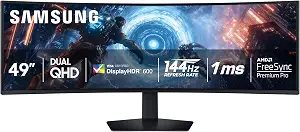
Best Overall is the editorial pick for shoppers whose main goal is a particularly broad ultrawide gaming display. The Samsung Odyssey G9 has a 49-inch screen with a 32:9 aspect ratio and 5120×1440 pixels. That combination gives this option a distinct shape and resolution among the products here. Before choosing it, picture how such a wide canvas would fit your desk and the activities you want to place across it. Its appeal is tied to that large, unusually wide presentation rather than to a claim that it suits every setup.
The listed motion specifications are a 144-hertz refresh rate and a 1-millisecond response time. These are useful details to compare if motion specifications matter to the games or other content you use, but they are separate figures and should be considered as stated. The product name also identifies AMD FreeSync Premium Pro, while the supplied facts specify VESA DisplayHDR 600. Those details may help narrow a shortlist when adaptive sync or HDR is part of your buying criteria; they do not establish how a particular game, source, or viewing environment will look.
For connections, the provided information lists DisplayPort, HDMI, and USB. Check the exact listing and your intended devices before assuming a particular port count or connection arrangement, since the available facts do not specify those details. During Black Friday, confirm that the offer is for the G91F model identified here and that the listing’s specifications match your needs. The Best Overall label is a buyer-fit recommendation among these selections, not a test result or a claim of market-wide superiority. Choose this Samsung when its 32:9 proportions, resolution, and stated features are the combination you actually want.
Key specs
Screen size
49 inches
Aspect ratio
32:9
Resolution
5120×1440 pixels
Refresh rate
144 hertz
Response time
1 milliseconds
DisplayHDR
VESA DisplayHDR 600
Ports
DisplayPort, HDMI, USB
SAMSUNG 34″ ViewFinity S50GC Series Ultra-WQHD Monitor
SAMSUNG 34″ ViewFinity S50GC Series Ultra-WQHD Monitor (ASIN B0C1KPXPM9)
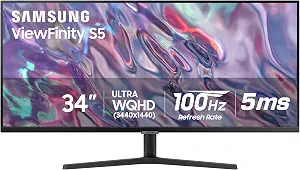
Best for Multi-Source Viewing is the editorial choice for the Samsung ViewFinity S50GC, based on its listed picture-by-picture capability. With PBP, it can show input from 2 simultaneous sources at native resolution, according to the supplied specification. That makes it a relevant option for a shopper who wants to consider two inputs on one screen. Think about whether that viewing arrangement belongs in your everyday routine, rather than treating the feature as useful simply because it appears in a listing.
The monitor has a 34-inch screen, 3440 x 1440 pixels, and a 21:9 aspect ratio. Its listed refresh rate is 100 hertz and its response time is 5 milliseconds. These figures provide a clear basis for comparing it with the other options, but the right choice depends on which specifications matter for your own activities. The matte screen finish, HDR10 picture quality, and FreeSync adaptive sync are additional stated details. Include them in your comparison when those labels are relevant to your preferences, without assuming they predict an individual viewing experience.
The ViewFinity is a 34-inch alternative to the curved Sceptre at the same listed resolution and aspect ratio, while its supplied features emphasize PBP and a matte finish. Use those facts to decide which product fits your intended routine; no unsupported conclusion about image quality or overall performance is needed. Black Friday shoppers should confirm the exact S50GC series listing and verify that PBP and the other specifications appear for the offered variant. This recommendation label reflects a specific provided feature, not measured superiority. Pick it if seeing two sources at native resolution is a real requirement for your setup.
Key specs
Screen size
34 inches
Resolution
3440 x 1440 pixels
Aspect ratio
21:9
Refresh rate
100 hertz
Response time
5 milliseconds
Screen finish
Matte
Picture quality
HDR10
Adaptive sync
FreeSync
Multi-source viewing
With PBP, view input from 2 simultaneous sources at native resolution
Begin with the width your daily tasks can use
An ultrawide can serve very different purposes, so start by describing what you want to see at once. A broad gaming view, room for working across several windows, and a shared view of separate inputs are not interchangeable goals. The listed products show three clear directions: a 49-inch, 32:9 Samsung Odyssey G9; two 34-inch, 21:9 screens; and a ViewFinity model whose PBP specification explicitly covers simultaneous inputs. Ask which of those distinctions solves a real problem in your routine before comparing Black Friday offers.
Next, consider the physical setting without guessing at dimensions the listings do not provide. Measure the available desk area and think about where the display will sit in relation to your usual work or play position. The Odyssey G9’s listed screen size and 32:9 ratio point to a substantially broader format than the 34-inch models, but the information here does not provide a stand footprint or curvature measurement. Use the exact product page for any setup detail you need, and avoid assuming two products with wide screens will occupy the same space.
Finally, make a shortlist based on a purpose, not a superlative. If you want the broadest listed format in this group, investigate the G9. If you want a 34-inch 21:9 screen, compare the Sceptre and ViewFinity. If showing inputs from two sources is central, give the ViewFinity’s PBP specification particular attention. This approach keeps Black Friday browsing focused: a tempting label matters less than whether the screen’s proportions and stated capabilities match the job you have in mind.
Choose resolution and proportions for the view you prefer
Resolution and aspect ratio describe different parts of the viewing format, so read them together. The Sceptre and ViewFinity each list 3440 x 1440 resolution and a 21:9 aspect ratio. The Odyssey G9 lists 5120×1440 pixels with a 32:9 ratio. Those exact specifications help distinguish the options without assuming that a higher figure automatically means a better experience for every use. Consider whether you want the wider 32:9 format or prefer to compare the two 21:9 models.
Think about the content and applications you actually expect to put on the screen. For example, if your routine includes placing more than one window side by side, ask whether the screen shape and resolution suit the way you organize those windows. That is a planning question, not a guarantee about application behavior. For video, games, or other content, check the requirements and supported formats of the source you intend to use rather than inferring compatibility from the monitor’s proportions alone.
During Black Friday, compare the resolution and aspect ratio on the exact listing you are considering, not just in a short promotion title. Product names and family names can be similar, while the relevant choice is the specific model and its confirmed specifications. If you are choosing between the two 34-inch screens, their shared listed resolution and aspect ratio mean other stated features may be more useful in deciding. If considering the G9, make sure its wider proportions serve your particular setup. A deliberate format choice is more useful than pursuing a specification without a clear reason.
Read motion specifications without collapsing them into one claim
Refresh rate and response time are separate specifications. The listed refresh rates are 165 hertz for the Sceptre, 144 hertz for the Odyssey G9, and 100 hertz for the ViewFinity. Response times are stated as 1ms MPRT, 1 milliseconds, and 5 milliseconds, respectively. Preserve the Sceptre’s MPRT qualification when comparing listings: response-time terminology and methods may be presented differently, and the provided figures should not be rewritten as though they were identical measures.
Use these details as filters based on your own content. Someone who places importance on the refresh-rate figure can compare the three stated values, then look at the exact model page for any additional context relevant to their source and use. Someone whose routine is less sensitive to motion specifications may put more weight on resolution, screen shape, finish, or PBP. Neither approach needs a blanket claim that a particular figure guarantees a preferred experience.
Black Friday promotions can make a headline specification feel especially prominent, so keep your own priorities visible. Ask what each number contributes to your decision, and compare the exact variant rather than assuming every model in a product family has the same specification. If a seller’s listing does not make the relevant detail clear, verify it before purchase. The aim is not to choose the largest number by default; it is to find a specification set that makes sense for the content you plan to view.
Check image and viewing features against your preferences
Some listed features help distinguish the screens beyond size and resolution. The ViewFinity specifies a matte screen finish, HDR10 picture quality, and FreeSync adaptive sync. The Odyssey G9 lists VESA DisplayHDR 600 and AMD FreeSync Premium Pro in its product name. These are different descriptions, so retain the exact wording when comparing them. The available information does not establish a direct picture-quality ranking between the models or predict how a feature will appear in your room.
PBP gives the ViewFinity a more specific use case: its listed capability is to view input from 2 simultaneous sources at native resolution. Before making that feature a deciding factor, consider whether you need two inputs visible together and check the product page for practical details you require. Do not assume the feature will support every arrangement or device without confirmation. If simultaneous-source viewing is not part of your plan, compare the other stated characteristics instead.
For Black Friday, make a short list of the image and viewing details you care about, then verify each against the precise listing. A label such as HDR10 or DisplayHDR 600 can be relevant, but it should not replace a check of your own preferences and source requirements. Likewise, adaptive-sync wording may matter to one shopper more than to another. Treat these facts as decision points rather than as promises about your individual setup, and avoid paying attention to a promotional claim that does not answer a question you actually have.
Verify connections and the Black Friday listing before checkout
Write down the connection types used by the devices you plan to attach, then compare that list with the facts available for each model. The Sceptre specifies 2 x HDMI Port and 2 x DP Port. For the Odyssey G9, the supplied port information names DisplayPort, HDMI, and USB, without giving counts. The ViewFinity facts provided here do not specify ports. That distinction is a reason to consult the exact product page when connection details are essential, not a basis for assuming a feature is absent.
The Black Friday offer itself also needs a careful check. Confirm that the listing identifies the model you shortlisted, and make sure its displayed specification details correspond to that model rather than relying on a broad family name or promotional wording. Compare the actual offer shown at the time with your own alternatives; no sale price, discount, or availability is established in this guide. If any key detail is unclear, resolve that uncertainty before treating the offer as a match.
A practical final pass can be brief: confirm the model identifier, screen size and shape, resolution, the motion figures you care about, required viewing features, and connection information. Then decide whether the offer fits your intended use and budget based on the exact listing. Black Friday can be a useful moment to compare options, but urgency is not a substitute for verification. Keep a record of the model you meant to buy, and do not let a similar product name steer you to a different variant.
Make your Black Friday choice
The right ultrawide is the one whose format and stated features support your actual routine. Choose the Odyssey G9 if its 49-inch, 32:9 presentation and listed features align with your plan; consider the Sceptre for its 34-inch 21:9 format and stated connections; or focus on the ViewFinity if its PBP capability is useful to you. For Black Friday, finish by checking the exact model, variant, specifications, and offer displayed on the listing. Let that checklist—not the sale label alone—make the final call.