Best Monitor Buying Guide — Black Friday Deals 2026
A monitor shortlist is most useful when it starts with the work, games, and available desk space you need it to accommodate. These three options take different approaches: a compact Full HD display with HDMI, VGA, and VESA mount compatibility; a 27-inch IPS display with a 144 hertz refresh rate; and a curved ultrawide with a 21:9 aspect ratio. Those specifications help define what each listing offers, but they cannot answer every question about your setup or preferences. During Black Friday, compare the exact model and variant, then weigh its listed features against your priorities rather than assuming a promotion makes it the right fit.
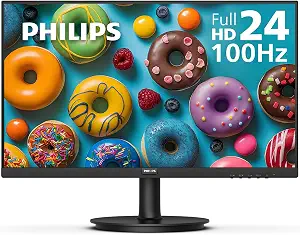
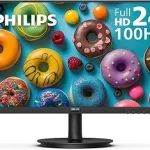
Philips 24 Inch Computer Monitor FHD 100Hz VA VESA Flicker-Free, 241V8LB
Philips 24 Inch Computer Monitor FHD 100Hz VA VESA Flicker-Free, 241V8LB (ASIN B0C8ZKV5R9)
The Philips 241V8LB is the Best Budget choice among these featured monitors, based on its straightforward set of listed specifications rather than on a price claim. Its screen measures 23.8 inches and has a 1920 x 1080 pixels resolution. The display technology is VA LCD, and the refresh rate is 100 hertz. For a home workspace, study area, or general-purpose screen, those details let you compare its size and format with the space and tasks you have in mind. They do not establish picture quality, comfort, or suitability for a particular application, so consider those matters against your own needs.
Its connection details may matter if you are choosing between devices with different output options. The listed connectivity is HDMI and VGA. Before buying, check the ports on the computer or other source you plan to connect and confirm that the exact connection path works for your setup. The monitor is also listed as VESA Mount compatible. That gives shoppers considering a VESA mounting arrangement a relevant specification to verify against their planned placement; it does not establish that a particular mount is included or suitable. Check the product listing for any mounting details you need before checkout.
The Philips can make sense when you want a smaller listed screen size than the Dell and value having both a digital and a VGA connection named in the specifications. The 100 hertz refresh rate gives you a figure to compare with the refresh needs of your routine, while the Full HD resolution describes the listed pixel dimensions. These facts should not be stretched into assumptions about performance or image characteristics that are not provided. During Black Friday, treat Best Budget as our label for this guide, not proof of the lowest price. Check the exact 241V8LB listing and compare its offer with your priorities, including screen space, connections, and mounting plans.
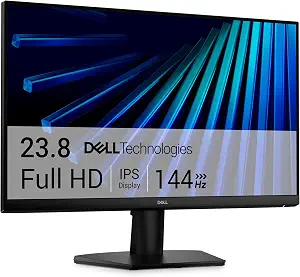
The Dell SE2726H earns the Best Overall label in this guide as an editorial choice for shoppers who want a mid-size screen paired with a high listed refresh rate. It has a 27-inch IPS display, 1920×1080 resolution, and a 144 hertz refresh rate. That combination gives you concrete points to compare with your own priorities: screen size, resolution, display technology, and refresh. It does not establish how the display will look in your room or how a particular game or application will perform, so use those listed details as a starting point rather than a promise about your experience.
For everyday planning, think about what you expect to keep on screen and how much desk space the display can occupy. A 27-inch screen may suit someone who prefers a larger listed screen size than the Philips option, while the 1920×1080 resolution remains an important detail to consider alongside that size. If you are comparing it for gaming, the 144 hertz refresh rate and 1 milliseconds response time are listed specifications worth checking against the requirements of your devices and software. They are not, on their own, evidence of a particular outcome or a guarantee that every connected source will use those capabilities.
The connection and positioning details help make the buying decision more specific. The listing identifies two HDMI ports and tilt adjustment, so check your intended connection route and whether tilt addresses the positioning change you want. The provided details do not describe every port or adjustment, so confirm any other must-have requirement on the exact listing before you decide. The Best Overall label means this is our broad-use pick among these three products, not a test result or a market-wide award. On Black Friday, compare the exact SE2726H offer with your own checklist; assess the listed model and variant, not just the size or headline wording.
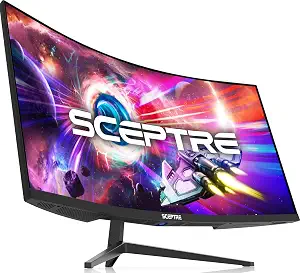
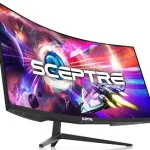
The Sceptre C345B-QUT168 is labeled Best for an ultrawide gaming setup because its listed format and refresh specifications make it the most explicitly ultrawide-oriented option here. It has a 34-inch curved screen, a 21:9 aspect ratio, and a 3440 x 1440 resolution. Those details are useful if your intended layout calls for a wider screen shape than a conventional Full HD listing. They do not prove that a particular game supports the format or establish how its picture will look, so check the requirements of the content and devices you plan to use.
For gaming-focused comparisons, the Sceptre lists a 165 hertz refresh rate and 1ms MPRT response time. Keep the response-time qualification as written: MPRT is part of the stated specification. These numbers help define what the product listing claims, but they are not a measured result here and cannot guarantee a specific experience. Consider whether your computer or other source is intended to use the resolution and refresh details you want, and confirm relevant requirements before choosing. This is especially worthwhile if your purchase decision depends on a particular game, display mode, or setup.
The connection list names 2 x HDMI Port and 2 x DP Port, giving you specific inputs to check against the devices you plan to connect. Think about your desk and viewing routine too: a curved 34-inch screen with a 21:9 aspect ratio calls for a different space plan than the smaller Philips display. The supplied facts do not give its stand adjustments, mounting options, or physical measurements, so verify any placement requirement on the listing rather than guessing. For Black Friday, compare the exact C345B-QUT168 offer and variant, and choose it for the ultrawide format only if that format suits your workspace and intended content.
Key specs
Screen size
34 inches
Resolution
3440 x 1440
Aspect ratio
21:9
Refresh rate
165 hertz
Response time
1ms MPRT
Connectivity
2 x HDMI Port, 2 x DP Port
Choose a format that suits your screen space
Start by picturing the monitor in its intended location, not just in a product image. The Philips is listed at 23.8 inches, the Dell at 27 inches, and the Sceptre at 34 inches with a curved screen and 21:9 aspect ratio. These are distinct size and format choices, so consider how much of your desk you can dedicate to a display and what shape fits your routine. The listed screen size alone does not tell you the full physical footprint; if available space is tight, check the product details for measurements before placing an order.
Think about your typical screen arrangement as well. You may prefer a compact display for a focused workspace, a larger standard-format screen, or an ultrawide shape for a layout that uses more horizontal space. Those are planning questions, not claims about how many windows any monitor can show comfortably. During Black Friday, avoid letting a headline deal distract from the physical fit. Match the exact model’s size and shape to your desk, seating position, and the other items sharing that area. If you cannot verify a needed measurement from the supplied listing, treat it as an open question and confirm it before buying.
Read resolution alongside screen size
Resolution and screen size describe different aspects of a monitor, so compare both instead of treating either as a complete summary. The Philips lists 1920 x 1080 pixels at 23.8 inches, and the Dell lists 1920×1080 at 27 inches. The Sceptre lists 3440 x 1440 at 34 inches. These facts establish the stated pixel dimensions and screen sizes, but they do not establish sharpness preferences, color performance, or how a specific application will appear. Consider what you display most often and check whether your source device supports the setup you want.
A shopper weighing the Sceptre’s ultrawide format should account for its 21:9 aspect ratio as well as the resolution, because the shape is part of the purchase decision. For the other two, the listed resolution is the same wording-level category of dimensions, while their screen sizes differ. That comparison is factual, not a verdict about which image will look better. During Black Friday, compare the resolution and size on the exact model page, especially if search results or promotions group several variants together. If a particular workflow or game has a resolution requirement, verify it separately rather than relying on a general product label.
Decide what refresh and response figures mean to you
The three listings give shoppers different refresh-rate figures: 100 hertz for the Philips, 144 hertz for the Dell, and 165 hertz for the Sceptre. The Dell also lists a 1 milliseconds response time, while the Sceptre specifies 1ms MPRT. Keep those labels distinct when comparing products. The available facts do not establish real-world motion performance, compatibility with every source, or which option is best for your games. Instead, use the specifications to identify candidates, then check the display requirements of your intended devices and the content you use.
For work that is mostly reading, browsing, or document editing, decide whether the refresh figure is a priority at all, rather than assuming a higher listed number should determine the purchase. For gaming, check the requirements and settings you expect to use before paying extra for a feature you may not need or be able to use. Black Friday can make quick comparisons tempting, but an offer should not substitute for checking the exact specification. Also preserve the response-time wording: a value accompanied by MPRT is not presented in the same form as the Dell’s listing.
Check ports against your actual connection plan
Before choosing, write down which devices you intend to connect and what outputs they use. The Philips lists HDMI and VGA, the Dell lists two HDMI ports, and the Sceptre lists 2 x HDMI Port and 2 x DP Port. These are the connection facts provided for each model. They do not confirm that a cable is included, identify every possible connection detail, or establish compatibility with a device not described here. Verify that the exact port combination matches your planned setup, including any requirement for a particular input.
Consider whether you will keep one source connected or switch between sources, but do not infer switching behavior from a port count alone. If your setup requires a connection that is not named in the product details, look for confirmation before checkout. This step matters during Black Friday too: a discounted listing can still be the wrong choice if its stated connections do not fit your device plan. Compare the model identifier and the port information together, rather than relying on a broad product title or a category search result.
Use Black Friday listings as a verification step
When comparing Black Friday offers, check that the model name and variant match the one you intend to buy. This guide covers the Philips 241V8LB, Dell SE2726H, and Sceptre C345B-QUT168; their specifications are not interchangeable simply because they are all monitors. Make a short checklist from the facts that matter to you: screen size, resolution, refresh rate, display technology, inputs, and positioning needs. Then confirm the offer corresponds to the model whose details you evaluated. No active promotion or price is established here, so judge any offer using the listing you are considering.
Be cautious about filling gaps with assumptions. The details supplied for these models do not settle every question about included accessories, physical dimensions, stand range, or a particular device’s compatibility. If one of those points is essential, find a clear answer on the exact listing before making the purchase. A Black Friday label is not evidence that a feature is present or that the offer is suitable. Compare the total set of confirmed details with your checklist, and be willing to pass if a critical requirement remains unclear.
Make your Black Friday choice
The best choice depends on which listed features solve your real setup needs. Choose the Philips if its 23.8-inch Full HD format, HDMI and VGA connectivity, and VESA Mount compatibility fit your plan. Consider the Dell for its 27-inch IPS display, 144 hertz refresh rate, two HDMI ports, and tilt adjustment. Look to the Sceptre if its curved ultrawide format and stated gaming-oriented specifications suit your desk and content. These are guide-specific editorial recommendations, not test outcomes. During Black Friday, verify the exact model and variant, check any unresolved setup requirement, and compare the offer only after confirming the monitor fits your priorities.