Best 4K Projector Buying Guide — Black Friday Deals 2026
A 4K projector shortlist is most useful when it starts with the way you plan to watch, not with a single headline specification. These three options take different routes: one pairs a laser light source with a broad stated image-size range, one combines native 4K resolution with Google TV and automatic setup functions, and one lists a 240Hz refresh rate alongside HDR/HLG compatibility. Each distinction may matter more than a general claim about picture quality. For Black Friday, treat the banner as a prompt to inspect the exact listing, not proof of a particular discount. Confirm that the offer is for the model and configuration you intend to buy, then weigh its listed features against your room, connections and viewing habits.
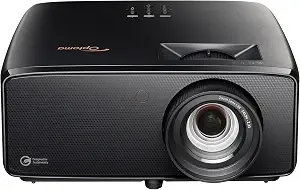
Optoma UHZ36 4K UHD Laser HDR Home Theater Projector – Black
Optoma UHZ36 4K UHD Laser HDR Home Theater Projector – Black (ASIN B0GGVZW2X2)
Best Overall is the editorial label for the Optoma because its listed features make a clear case for shoppers prioritizing a laser light source and flexible stated image sizing. Its native 3840 x 2160 resolution gives you a concrete resolution specification to compare with the other choices. The DLP display type and 3500 lm brightness add useful details for a shortlist, but the brightness figure alone cannot tell you exactly how the image will look in your room. Screen material, placement and the light in your viewing space still belong in your decision.
The stated image range runs from a minimum of 28 inches to a maximum of 300 inches. That range gives you room to consider more than one screen plan, but it does not establish which size will suit a particular seating distance or room. Sketch the wall or screen location and measure the available space before treating the maximum as a target. A large stated maximum is a capability to consider, not a promise that every setup will be suitable. The listed 30000-hour light-source operating life is another concrete point for shoppers comparing a laser projector with alternatives; it should be read as the stated operating-life figure, not a guarantee of a particular ownership experience.
For a Black Friday comparison, this may suit someone who values the combination of native 4K, DLP, a laser light source and a wide stated image-size range more than built-in smart-platform details. The provided information does not establish its connections, sound features, installation adjustments or the performance of HDR content, so check the exact listing for any details that matter to your setup. Compare the same model and configuration across offers, and do not assume that a banner or product-family name settles what is included. The Best Overall label is a guide to this feature mix within this shortlist—not a claim that the projector is right for every room or viewing routine.
Key specs
Native resolution
3840 x 2160
Display type
DLP
Brightness
3500 lm
Light source operating life
30000 hours
Minimum image size
28 inches
Maximum image size
300 inches
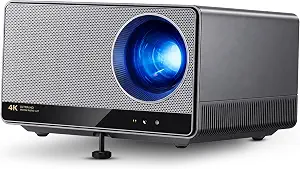
U1 PRO Native 4K UHD Google TV Projector 1700 ANSI Lumens
U1 PRO Native 4K UHD Google TV Projector 1700 ANSI Lumens (ASIN B0HDRX4DSG)
Best Budget is the supplied editorial label for the U1 PRO, but it should not be read as evidence of a particular price or discount. The useful reason to consider it is the combination of native 3840 x 2160 resolution, built-in Google TV and Google Voice Assistant, and listed automatic screen adjustments. That mix may appeal if you want the projector itself to provide a smart TV platform and voice-assistant function, rather than making those features the central question for a separate device. The listing also specifies two 16W HiFi speakers, giving you a stated audio detail to compare with your own needs.
Its setup functions include auto focus, auto keystone, obstacle avoidance and automatic screen alignment. Those are practical features to weigh if you expect to reposition the projector or want automated help with image setup. Their presence does not remove the value of choosing a suitable location and screen area; nor do the supplied details establish how the functions behave in every room. The maximum stated image size is 150 inches, so check the space you can dedicate to the projection rather than planning around the maximum alone. The listed 1700 ANSI Lumens is the brightness figure to compare, keeping its unit distinct from brightness figures given in other units.
For a Black Friday shortlist, this option makes sense when built-in platform and setup functions carry more weight for you than a projector selected primarily for a laser light source or a high refresh-rate specification. The listed connectivity is 2.4G+5G DualBand Wi-Fi and Bluetooth; check the exact listing for any other connection requirements you have rather than assuming an unlisted port or compatibility. Its stated LED lifespan is 30,000 hours, a specification to consider alongside your intended use. The Best Budget label is a shortlist designation, not a promise that this is the lowest-priced offer. Compare the exact model and offer details before deciding whether its feature mix fits your plans.
Key specs
Native resolution
Native Resolution 3840 x 2160
Brightness
1700 ANSI Lumens
Smart TV platform
Built-in Google TV & Google Voice Assistant
Speakers
2×16W HiFi Speakers
Connectivity
2.4G+5G DualBand Wi-Fi & Bluetooth
Screen setup
Auto focus, Auto keystone, Obstacle avoidance, Automatic Screen Alignment
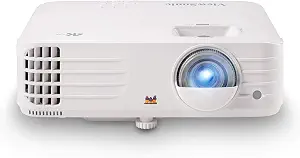
Best for high-refresh-rate priority is the editorial label for the ViewSonic PX701-4K. Its most distinctive listed point for that shopper is a 240Hz refresh rate. That specification gives you a direct reason to consider it if refresh rate is prominent in your comparisons, while leaving real-world results and the behavior of particular content unverified here. The projector also lists 4K resolution at 3840x2160p and HDR/HLG compatibility. Those details let you compare resolution and supported formats against your source material and priorities without treating a feature label as a guarantee of a particular viewing experience.
The stated brightness is 3,200 ANSI lumens. Keep the ANSI unit intact when comparing it with products whose brightness is expressed differently; numbers in different units should not be treated as interchangeable just because both describe brightness. For placement, the listing includes auto-keystone, four-corner adjustment and 1.1x optical zoom. These image-adjustment details may be relevant when you are planning where the projector can sit, but they do not establish that every position or room layout will be suitable. Its stated screen size goes up to 150 inches, which is best used as a planning limit to check against your available wall or screen area.
During Black Friday, this model may be worth a closer look if the refresh-rate specification and listed image adjustments align with your priorities. The listed connections are dual HDMI inputs and a powered USB-A port, useful facts to compare with the devices you expect to connect. Confirm that the exact listing is for the PX701-4K and review the configuration details rather than assuming that a promotion covers every similarly named product. The Best for high-refresh-rate priority label describes why this option has a place in this guide; it does not establish measured superiority over the other projectors or decide whether its other features fit your room.
Key specs
Resolution
4K (3840x2160p) resolution
Brightness
3,200 ANSI lumens
Refresh rate
240Hz refresh rate
HDR support
HDR/HLG compatibility
Image adjustment
auto-keystone, four-corner adjustment, and 1.1x optical zoom
Connectivity
dual HDMI inputs and a powered USB-A port
Screen size
screen sizes up to 150 inches
Make room conditions part of the comparison
Start with the room where the projector will actually be used. Note whether you can control light, where a screen or suitable wall could go, and how much space is available for the projected image. The listed brightness figures are useful comparison points, but they do not by themselves predict how a picture will look in your surroundings. Also keep the units as stated: the Optoma lists 3500 lm, while the U1 PRO and ViewSonic list ANSI Lumens. Do not rank those figures by directly comparing the numbers as if their units were identical.
Next, check the image-size limits against your plan. The Optoma lists a range from 28 inches to 300 inches, while the other two list maximum image sizes of 150 inches. A maximum is not a recommended target for every setup. Measure the intended image area and consider where the projector can be placed before deciding that a larger limit is useful. If you are comparing Black Friday offers, use the same room plan for each candidate. That keeps a tempting headline from distracting you from the practical question: can the listed image range work with the space you have?
Choose resolution and image features by content
All three products provide a 4K-resolution specification, although the wording differs slightly across their listings. That makes resolution a starting point rather than the only decision. Think about which image features you value after that baseline: the ViewSonic lists HDR/HLG compatibility and a 240Hz refresh rate; the Optoma product name identifies HDR and its specifications list DLP; the U1 PRO emphasizes native 4K resolution alongside its built-in platform and setup functions. These stated details help organize a shortlist, but they do not establish picture quality for your particular content or room.
If refresh rate is a high priority, the ViewSonic’s listed 240Hz gives you a specific figure to investigate in the exact listing. If your focus is the light source, the Optoma lists a laser source and a 30000-hour operating life. If automated setup tools matter more, the U1 PRO lists several such functions. During Black Friday, make the comparison about the combination you need, not the biggest number in isolation. Check that each offer is for the exact model under consideration and confirm any details not provided here before treating them as part of your buying decision.
Decide which setup help is worth prioritizing
Setup features can matter when a projector needs to fit around furniture, a screen location or a room that serves several purposes. The U1 PRO lists auto focus, auto keystone, obstacle avoidance and automatic screen alignment. The ViewSonic lists auto-keystone, four-corner adjustment and 1.1x optical zoom. Those are distinct sets of stated tools, so compare the functions by name against the sort of positioning decisions you expect to make. The provided facts do not show that either set will solve every placement challenge, and they do not establish how the functions respond in a specific space.
The Optoma details supplied here establish its image-size range, but do not specify image-adjustment tools. That is not evidence that a feature is absent; it simply means you should verify the listing if a particular adjustment is important to you. Think through your likely setup before browsing Black Friday promotions: will the projector stay in one chosen place, or might you need to change its position? Write down which adjustments are essential and which are optional. Then check the exact model listing for those details instead of assuming that similarly worded product pages describe identical configurations.
Map platform, sound and connections to your devices
The U1 PRO is the only one of these records that specifies a built-in smart TV platform: Google TV, along with Google Voice Assistant. It also lists 2.4G+5G DualBand Wi-Fi and Bluetooth. If those functions are relevant, consider how they fit the way you plan to use the projector, and verify any additional needs on the exact listing. Its two 16W HiFi speakers are a stated audio feature, but that specification alone does not establish whether the sound will meet your preferences in your room.
For the ViewSonic, the supplied connection details are dual HDMI inputs and a powered USB-A port. The Optoma facts provided here do not specify connections, so check its listing if you need particular inputs. Do not infer that an unlisted feature is either included or missing. During Black Friday, compare the input requirements of the devices you intend to use with the configuration shown on the offer page. This simple check can prevent you from choosing on the basis of an unrelated headline while leaving an essential connection question unanswered.
Compare the Black Friday offer, not just the headline
A Black Friday label does not establish that a particular projector is discounted, nor does it tell you whether an offer applies to the exact configuration you want. Before deciding, check the product name and model on the listing, then read the offer details shown for that item. Compare the listed features against your shortlist and confirm any information that matters but is not covered in this guide. Avoid relying on a similar product image or a broad family name when a specific model is your target.
It can help to keep a short decision note: your preferred image plan, the features you consider essential, and any connection or setup questions that still need confirmation. Apply that same note to each Black Friday candidate instead of letting the wording of a promotion change your priorities. If you are comparing offers, check the exact terms displayed for each one and make sure you are evaluating the same model. A careful match between your needs and the listing is more useful than assuming a seasonal banner establishes value, availability or suitability.
Make your Black Friday choice
The right choice depends on which listed features solve the most important problem in your viewing setup. Consider the Optoma for its stated laser light source and broad image-size range, the U1 PRO for its built-in Google TV and automatic setup functions, or the ViewSonic if its listed refresh rate is central to your shortlist. Those are feature-based distinctions, not guarantees of a better experience in every room. For Black Friday, verify the exact model and offer details, revisit your space and connection requirements, and leave unanswered specifications open until you confirm them on the listing. A deliberate comparison can make the seasonal search more useful without treating a promotion as a reason to compromise.