Western Digital 8TB WD Red Plus NAS Internal Hard Drive HDD (ASIN B0CMQ6SK7W)
Best Budget
Seagate IronWolf 4TB NAS Internal Hard Drive CMR 3.5 Inch SATA 6Gb/s 5400 RPM 64MB Cache for RAID Network Attached Storage Rescue Services (ST4000VNZ06/006)
Seagate IronWolf 4TB NAS Internal Hard Drive CMR 3.5 Inch SATA 6Gb/s 5400 RPM 64MB Cache for RAID Network Attached Storage Rescue Services (ST4000VNZ06/006) (ASIN B09NHV3CK9)
Best Nas Drive Buying Guide — Black Friday Deals 2026
A NAS drive choice starts with the storage job, not the Black Friday banner. Consider how much space you need, what the NAS documentation specifies, and which drive details matter to your setup. These options cover different priorities: a higher-capacity, higher-rotation WD Red Pro; an 8TB WD Red Plus with NASware firmware; and a 4TB Seagate IronWolf identified for NAS use. Their listed specifications give you useful points of comparison, but do not establish how a drive will perform in your particular system. During Black Friday, compare the exact model and variant before deciding whether an offer suits your plan.
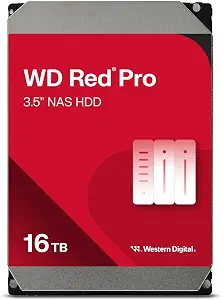
Western Digital 16TB WD Red Pro NAS Internal Hard Drive HDD – 7200 RPM, SATA 6 Gb/s, CMR, 512 MB Cache, 3.5″ – WD161KFGX
Western Digital 16TB WD Red Pro NAS Internal Hard Drive HDD – 7200 RPM, SATA 6 Gb/s, CMR, 512 MB Cache, 3.5″ – WD161KFGX (ASIN B08K3VVKSW)
Best Overall is an editorial pick for shoppers whose first priority among these options is substantial listed capacity paired with the WD Red Pro’s specified workload figure. The drive provides 16 TB of storage and is rated for a 550TB/yr workload rate(2). Those are useful facts to weigh if you are planning a NAS around a large collection of files or expecting a busy storage role. They do not, by themselves, determine how much usable space your particular storage arrangement will provide, or establish performance in a given NAS.
The remaining specifications help define the model more precisely. It uses CMR recording technology, has a 7200 rpm rotational speed, and includes 512 MB of cache. Its hard disk interface is Serial ATA-600, and its form factor is 3.5 inches. Treat each as a separate selection detail: the interface and form factor are items to check against your NAS documentation, while recording type, rotation and cache give you specific attributes to compare with other candidates. No single number here answers every question about fit or suitability.
For a shopper choosing a NAS drive during Black Friday, this option makes sense to investigate when its capacity and workload specification line up with the intended storage role. Check that the listing is for the exact model and that your NAS documentation supports the relevant connection and drive format. The model’s combination of 16 TB, CMR and the stated 550TB/yr workload rate(2) provides a clear set of facts for that check. It is not a reason to assume that every NAS or workload is a match; consult the requirements for your equipment and use. Compare the complete offer rather than judging it from the WD Red Pro family name alone.
Key specs
Storage capacity
16 TB
Rotational speed
7200 rpm
Hard disk interface
Serial ATA-600
Recording technology
CMR
Cache
512 MB
Form factor
3.5 inches
Rated workload
Rated for 550TB/yr workload rate(2)
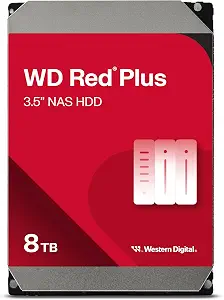
Western Digital 8TB WD Red Plus NAS Internal Hard Drive HDD
Western Digital 8TB WD Red Plus NAS Internal Hard Drive HDD (ASIN B0CMQ6SK7W)
Best for an 8TB capacity option describes the WD Red Plus’s clearest distinguishing role in this group. It lists 8000 GB of storage, a capacity choice to consider if it better fits your NAS plan than the other listed capacities. The drive also specifies CMR recording technology and a workload rate of up to 180 TB/yr. Those details can help you build a shortlist, but capacity alone cannot tell you how much room your particular arrangement will have for files, or how the drive will behave in a specific NAS.
The rest of the provided information adds practical checkpoints. This 3.5 inches drive has a Serial ATA-600 interface, a rotational speed of 5640 rpm, and 256 MB Cache. It also lists NASware firmware for compatibility. Use that firmware description as a reason to check the exact NAS model’s documentation, rather than as a guarantee for every device. Likewise, do not treat rotation or cache as a complete measure of real-world suitability; they are individual specifications that can be compared alongside your requirements.
During Black Friday, this drive is worth comparing when the capacity is your priority and the listed workload rate is relevant to your intended use. Confirm the precise WD Red Plus variant in the offer, then check the interface, form factor and firmware information against the NAS documentation. The provided facts make it possible to compare the product on its stated terms: 8000 GB, CMR, up to 180 TB/yr, and NASware firmware for compatibility. They do not establish the right choice for all users. If your NAS instructions or expected storage demands point elsewhere, prioritize those requirements over a deal label or a broad product-family description.
Key specs
Storage capacity
8000 GB
Interface
Serial ATA-600
Rotational speed
5640 rpm
Recording technology
CMR
Cache
256 MB Cache
Form factor
3.5 inches
Workload rate
Supports up to 180 TB/yr workload rate
Firmware
NASware firmware for compatibility
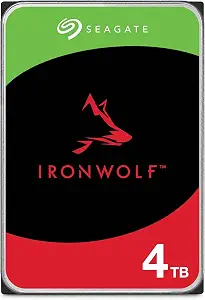
Seagate IronWolf 4TB NAS Internal Hard Drive CMR 3.5 Inch SATA 6Gb/s 5400 RPM 64MB Cache for RAID Network Attached Storage Rescue Services (ST4000VNZ06/006)
Seagate IronWolf 4TB NAS Internal Hard Drive CMR 3.5 Inch SATA 6Gb/s 5400 RPM 64MB Cache for RAID Network Attached Storage Rescue Services (ST4000VNZ06/006) (ASIN B09NHV3CK9)
Best Budget is an editorial label for the Seagate IronWolf in this selection, not a claim about its current price or a market-wide ranking. Its listed capacity is 4TB, making it the smaller-capacity option here. That can be a useful starting point for someone whose storage plan calls for that amount, or who is comparing a drive for a more limited storage role. The product facts do not establish whether it is the lowest-priced choice during Black Friday; check the exact offer and variant to judge value for yourself.
The specifications identify a 3.5 Inch drive with a SATA 6Gb/s interface and CMR recording type. It has a 5400 RPM rotational speed and 64MB Cache. The listing also describes NAS compatibility for up to 8-bay, multi-user NAS environments. That qualification is useful context when checking a potential fit, but it is not a substitute for confirming the requirements of your exact NAS. Keep the stated scope intact rather than extending it to a different configuration or assuming compatibility beyond the description.
For Black Friday shopping, this model gives you a straightforward set of details to compare if 4TB aligns with your plans. Confirm that the offer names the intended model, then review its capacity, connection, physical format and stated NAS compatibility against the documentation for your equipment. CMR, rotational speed and cache are additional comparison points, not promises of a particular outcome in daily use. If you are deciding between it and a higher-capacity drive, first decide whether the extra listed space is useful to your storage plan. A lower or appealing offer price should not override an unresolved question about fit or capacity.
Key specs
Capacity
4TB
Recording type
CMR
Form factor
3.5 Inch
Interface
SATA 6Gb/s
Rotational speed
5400 RPM
Cache
64MB Cache
NAS compatibility
up to 8-bay, multi-user NAS environments
Translate your storage plans into a capacity shortlist
Start by thinking about the files you expect to keep in the NAS and whether you want the drive’s listed capacity to leave room for your plans. The products here list 4TB, 8000 GB and 16 TB, so the choice is not simply between three interchangeable labels. Consider whether a smaller listed capacity meets the storage job, whether the 8TB-class option suits your current needs, or whether the 16 TB model is the more relevant candidate. The facts do not state how much space a particular NAS arrangement will make available, so use your system’s documentation and storage plan for that part of the decision.
Black Friday can make it tempting to start with whichever offer looks most compelling. Instead, decide what capacity you are looking for before comparing listings. This keeps a deal on a drive with the wrong amount of space from distracting you from a better-fitting option. Also check the exact capacity notation on the product page: the WD Red Plus is listed as 8000 GB, while the other two use TB labels. Do not assume that the capacities mean a particular usable amount in your setup. Treat them as the stated product capacities and verify what your NAS arrangement supports.
Use NAS documentation to resolve connection and format questions
A drive can look like a match on capacity yet still require a closer fit check. The listed products use a 3.5-inch-class physical format, with the specifications written as 3.5 inches or 3.5 Inch. Their interfaces are described as Serial ATA-600 or SATA 6Gb/s. Before you buy, compare the exact drive details with the requirements for your NAS model. The provided specifications identify what each product lists; they do not establish that a particular enclosure or NAS accepts it.
The Seagate listing additionally describes NAS compatibility for up to 8-bay, multi-user NAS environments. Keep that qualification attached to the product rather than treating it as universal compatibility. The WD Red Plus listing names NASware firmware for compatibility, which is another detail to check against your NAS documentation. Neither description removes the need to verify your particular equipment. On Black Friday, check the product page’s exact variant and model information as well as the NAS instructions. If you cannot confirm the connection or physical fit, pause before purchase instead of relying on a product-family name.
Consider CMR as one piece of the specification picture
All three options list CMR recording technology. That gives shoppers a consistent fact to note when comparing these particular drives, but it does not settle every question about suitability. Keep recording technology in its own lane alongside capacity, interface, physical format, workload information and the NAS maker’s requirements. A matching CMR label should not be read as proof of compatibility with a specific system or as a prediction of how a drive will perform for your files.
Use the listing’s wording carefully when checking Black Friday offers. Confirm that the precise product variant you are considering is the one whose supplied specification identifies CMR. Product names can be similar, and the listing details matter more than a broad family label. If a page does not clearly identify the variant or its recording type, look for clarification before treating it as the same choice. This approach keeps the comparison grounded in the facts provided and helps prevent a sale banner from substituting for a specification check.
Read rotation, cache and workload as separate clues
The listed rotational speeds range across 5400 RPM, 5640 rpm and 7200 rpm, while cache figures are 64MB Cache, 256 MB Cache and 512 MB. These are separate specifications, not a complete performance comparison. Think about them as details that can help distinguish the listings after you have established capacity and fit. The records do not supply results for particular tasks, so avoid turning a speed or cache figure into a promise about file access, responsiveness or suitability for a given pattern of use.
Workload information is also presented differently: the WD Red Pro is rated for a 550TB/yr workload rate(2), the WD Red Plus supports up to 180 TB/yr, and no workload figure is provided for the Seagate in these facts. Do not infer a missing figure or compare the stated qualifications as if they were identical measurements. Instead, identify whether a workload specification is relevant to your plans, retain its exact wording, and consult the manufacturer’s information if you need details beyond what the listing states. During Black Friday, use these figures to narrow questions, not to bypass them.
Make Black Friday comparisons specific to the listed variant
A useful Black Friday comparison begins with the exact drive, not a general NAS-drive category or a family name. Match the model and variant in the offer to the product you meant to consider, then review its listed capacity, recording type, interface and form factor. Where relevant, check rotational speed, cache, workload information and firmware details as well. A product page’s wording should support the comparison; do not assume that a similarly named listing carries the same specifications.
Next, judge the complete offer against your priorities. The supplied information does not include prices, discounts, availability or seller terms, so those must be checked directly on the current listing. Compare the offer you actually see with the exact capacity and model you need rather than assuming a Black Friday label guarantees value. If one detail is unclear, do not fill the gap with an assumption. Confirm it through the product listing and NAS documentation before proceeding. This practical sequence helps separate a relevant deal from one that merely has an appealing headline.
Make your Black Friday choice
The best NAS drive for your plans is the one whose capacity, listed specifications and documented fit make sense for your system. The WD Red Pro stands out here for its 16 TB capacity and stated workload rate; the WD Red Plus offers the listed 8000 GB capacity and NASware firmware; and the Seagate IronWolf provides a 4TB option with stated NAS compatibility qualifications. These labels describe editorial choices among these products, not measured superiority. For Black Friday, verify the exact variant and current offer, then let your storage needs and NAS documentation guide the final decision.