Lenovo IdeaPad 1: Best Overall
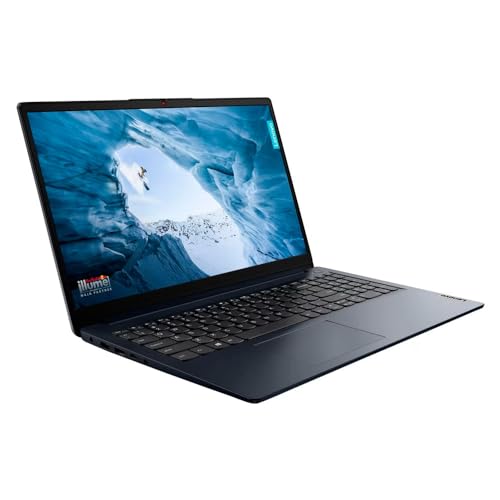
The overall machine is the Lenovo IdeaPad 1 15IJL7, model 82LX0050US. The title lists a 15.6-inch full HD screen, an Intel Pentium Silver N6000, 4GB of RAM, 128GB of flash memory, and Windows 11 Home. The overall label is a Windows notebook with integrated Intel UHD graphics, sitting between a Chromebook and a gaming laptop. It is not a gaming system and it is not a thin-and-light flagship.
A spec row on the capture said 10th Gen. The title and the CPU model row say Pentium Silver N6000, so that generation row is not the processor in this article. Another row said the keyboard was backlit. The About bullets do not say that, so this is not a backlit-keyboard claim. A drive row called the storage solid-state while the title says 128GB flash memory. Treat the storage as the flash memory the title names, not as a drive type the conflicting row tried to settle.
The capture’s offers ship from and are sold by Snow Bell and by Oydisen Computer. Those are third-party sellers, not a sentence that says Amazon.com is the seller. Read the seller on the listing you open. A third-party seller can be a normal retail offer, and it is still a different counterparty than Amazon.com. The photo shows a blue Lenovo, open, with a number pad and a Lenovo logo on the bezel.
Four gigabytes is enough for a browser and a document, and it is tight if you keep many tabs, a video call, and a store app open together. You cannot assume this board takes a later memory upgrade. If the listing does not promise an empty slot, plan on 4GB for the life of the machine. Windows 11 Home is the operating system on the title. A Chrome-only school account can still use the browser, and a program that is Windows-only is the reason to pick this over the Chromebook.
The IdeaPad is the overall machine to settle early because its limits are permanent on this model. 82LX0050US means Pentium Silver N6000, 4GB, 128GB flash memory, Windows 11 Home, 15.6-inch full HD. An early comparison that says 10th Gen is repeating a row the capture rejected. Do not carry that label into a spreadsheet. An early photo that implies a backlight is ahead of the About text. Do not add it. Flash versus a conflicting solid-state row stays unresolved in the way that matters: trust the title’s flash memory wording.
Sellers on the capture are Snow Bell and Oydisen Computer. An early marketplace offer can change who sells it. The model cannot change without becoming a different laptop. If a later offer of the same 82LX0050US names a seller you prefer, the computer is still this computer. If an early offer will not name the seller at all, do not rush. Third-party fulfillment is a fact to read, not a reason to invent a checkout timer.
Decide early if 4GB of Windows is the plan. If you already know you will want 16GB, you are looking at the TUF, not at a future version of this IdeaPad. Early is for committing to a real configuration. It is not for reserving a feeling.
Acer Chromebook 315: Best Budget
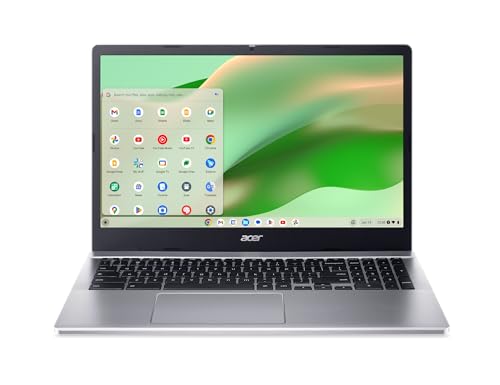
The budget machine is the Acer Chromebook 315, model CB315-5H-C7KX, in Sparkly Silver. The page lists a 15.6-inch full HD IPS display, an Intel Processor N100, 4GB of LPDDR5, 128GB of eMMC, Wi-Fi 6E, and Chrome OS. The budget label is that simpler platform: Chrome OS, no discrete graphics chip, and no Windows install. It is not a Windows notebook that someone forgot to name, and it is not the 17-inch gaming laptop later in this set.
Four gigabytes of memory and 128GB of eMMC are the limits you live with. Chrome OS keeps many files online, which helps, and it still fills if you download a semester of video or a stack of installers. The N100 is an everyday processor for a browser, documents, and calls. It is the wrong chip if you expected to edit long video on the device itself. The photo shows a silver Acer open to a Chrome OS desktop, with a number pad. Read CB315-5H-C7KX on the listing before you treat a different Chromebook 315 as this one. Acer uses that family name on more than one configuration.
Buy this Chromebook when the work is a browser and the storage number is acceptable. Skip it when a class or a job requires a Windows-only desktop program. A Chromebook will not grow a Windows partition because a seasonal page grouped it with Windows laptops.
Early in a seasonal calendar, the Chromebook is the configuration to lock or to walk away from, because there is nothing to upgrade later. CB315-5H-C7KX is N100, 4GB LPDDR5, 128GB eMMC, Chrome OS, 15.6-inch full HD. An early listing that omits the model code is not an early opportunity. It is an unfinished listing. Wait for the code. eMMC of this size will not become a larger drive because a later week arrives. If 128GB is too small, decide that now.
Chrome OS is also a now-or-not decision. A shopper who hopes a Chromebook will pick up Windows before a trip is planning on a different computer. Early pages are full of category names and short on the CB315-5H-C7KX string. Search the string. The silver chassis and the number pad in the photo are consistent with this model. They are not a substitute for the model code if the title changes.
Buy early only when the code and the storage already fit. Skipping a vague early tile is allowed. A later week can still sell this exact Chromebook. Buying the wrong operating system early just gives you longer to regret it.
ASUS TUF Gaming A17: Best Premium
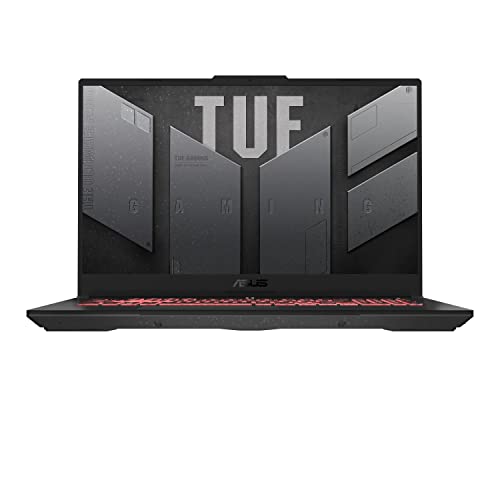
The premium machine is the ASUS TUF Gaming A17 from 2023, model FA707NU-DS74, in Mecha Gray. The title states a 17.3-inch full HD 144Hz display, a GeForce RTX 4050, an AMD Ryzen 7 7735HS, 16GB of DDR5, a 1TB PCIe 4.0 SSD, Wi-Fi 6, and Windows 11. The premium label is the dedicated graphics and the higher refresh rate. The photo shows a black ASUS gaming laptop with TUF on the lid and a backlit keyboard.
Sixteen gigabytes and a terabyte are a different class from the 4GB and 128GB machines above. The RTX 4050 is there for games and for programs that use a GeForce chip. It does not make a 17-inch laptop easy to carry, and it does not turn every homework file into a reason to own it. The 144Hz panel is a display spec from the title. A 60Hz office screen is a different product. Read FA707NU-DS74 so you do not accept another TUF A17 with a different graphics chip or a smaller drive.
This is the right premium when you already know you want a large gaming laptop and the model code matches. It is the wrong premium when you wanted a light notebook for notes. Weight, the power brick, and a 17-inch footprint are part of the purchase even though a seasonal photo crops them out.
The TUF is the premium configuration that most rewards an early, slow read. FA707NU-DS74 fixes RTX 4050, 144Hz, Ryzen 7 7735HS, 16GB DDR5, 1TB PCIe 4.0 SSD, and a 17.3-inch panel. Sibling TUF models change the GPU and the drive and keep a similar lid. An early grid of “TUF laptops” is how those siblings get mixed. Search the model. Confirm 4050 in the title, not only TUF on the lid in a photo.
A 1TB SSD and 16GB are the specs people try to postpone. They are already on this model. You do not need to wait for a later week to learn them. You do need to wait if the early listing hides the GPU. Unavailable detail is a reason to stop, not a reason to click the nearest gaming laptop. The 17-inch size will not shrink later in the season. Measure the bag now.
Buy the A17 early when FA707NU-DS74 is actually the title in front of you. Leave the tab open and unfinished when the title is only “gaming laptop.” A date on a calendar is not a spec.
Early Laptop Black Friday Deals 2026 buying advice
Early Laptop Black Friday Deals 2026 is a phrase about timing, not a different set of computers. The verified three are still the Acer Chromebook 315 CB315-5H-C7KX, the Lenovo IdeaPad 1 82LX0050US, and the ASUS TUF Gaming A17 FA707NU-DS74. Early does not add a discount this article can see, and it does not add a fourth spec. It means you decide the configuration while listings are incomplete, which is exactly when people buy the sibling model.
Lock these strings before you buy: Chrome OS with 4GB and 128GB eMMC, Windows 11 Home with a Pentium Silver N6000 and 128GB of flash memory, or Windows 11 with an RTX 4050, 16GB, and a 1TB SSD. The IdeaPad’s sellers on the capture are Snow Bell and Oydisen Computer. An early offer that hides the seller is unfinished. A conflicting 10th Gen row and a backlight row are not part of the decision. The TUF’s 144Hz panel is part of it, because a different refresh rate is a different panel.
What can wait: a sleeve, a mouse, a game code, and any bundle that is not the laptop. What should not wait: reading the model code and rejecting listings that omit it. On arrival, even if the order was placed early, check the sticker and the storage in settings immediately. An early shipment that sits unopened through the return window is how a wrong GPU becomes yours. Choose the Chromebook early only if Chrome OS and 128GB already fit. Choose the IdeaPad early only if 4GB Windows is acceptable and the seller is named. Choose the TUF early only if FA707NU-DS74 is on the page. If the page is vague, waiting is the early decision. A calendar cannot tell you the processor. A useful early note is a photograph of the title, the model code, and the seller, saved before you pay. If any of those three are missing, the listing is not ready, no matter how close the calendar sits to the named week. The Chromebook will still be Chrome OS later. The IdeaPad will still be 4GB of Windows later. The TUF will still be a 17-inch RTX 4050 later. None of them improves because you clicked sooner. Write the three model codes on a note and search only those codes. A page that will not echo the code back is a different laptop, however early it appeared and however similar the lid looks.