Northern Tool + Equipment 15 1/2in. XL Series Roller Seat with Tool Tray (ASIN B08KHRJ91V)
Best Northern Tool Buying Guide — Black Friday Deals 2026
A useful Northern Tool purchase starts with the job, not the seasonal banner. This guide covers three different needs: carrying equipment in a truck box, sitting at a work surface, and shifting between nearby tasks while seated. Their shared brand name does not make them interchangeable; each solves a different part of a work routine. For Black Friday, treat any advertised offer as a reason to check the exact product and variant, not as proof that it suits your setup. Compare the listed dimensions, adjustment range, capacity, and movement style with the demands of your work area. The right choice is the one whose documented features answer a real need without making you pay attention to extras that do not matter to your routine.
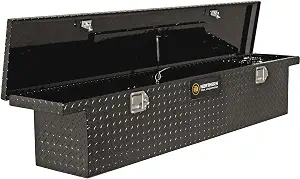
Northern Tool Slim Crossover Truck Tool Box, 69in. x 12in. x 13in.
Northern Tool Slim Crossover Truck Tool Box, 69in. x 12in. x 13in. (ASIN B01MQMM51V)
Best Overall is the editorial label for this group because the box gives truck owners a clearly stated storage format and capacity to assess before buying. Its dimensions are 69″L x 13″W x 12″H, and its listed capacity is 677 cubic inches. Those details make the first decision concrete: compare the box’s shape with the space and equipment you intend to accommodate, rather than relying on the word “slim” alone. The single compartment is a straightforward layout to consider if one main storage area fits your plan. If you need a more divided arrangement, think carefully about whether that one-compartment design suits how you organize your items.
The box is aluminum, has 0.045in. thick walls, and weighs 29 pounds. These are useful facts to weigh against your priorities, but they do not establish how it will perform in a particular truck or under a particular load. Check the listed measurements against your vehicle and intended placement before making a Black Friday decision. Also consider what you plan to store: the capacity figure describes volume, while the dimensions help you assess shape. Both matter when the items you carry have particular sizes or when the available space is limited. Neither number on its own confirms a fit.
This is the most natural choice here for shoppers whose priority is a truck-mounted storage box rather than a seat. The tradeoff is that its stated layout is one compartment, so your decision should account for whether that arrangement meets your organizational preferences. A shopper who wants a seat for garage work should compare the other two products instead; a seat cannot serve the same storage purpose. During Black Friday, compare the exact box listing and variant with the product details here. Do not let a promotion headline substitute for checking dimensions, capacity, material, and the compartment count. Best Overall is an editorial recommendation among these three listings, not a claim of tested or market-wide superiority.
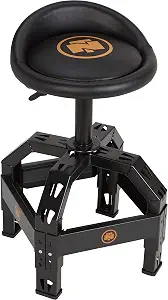
Best Budget is the editorial label for this shop stool, whose listed features center on adjustable seated work rather than moving around the room. The vinyl seat is 14.1in. dia. and has soft foam padding. Its height adjusts from 27.5in. to 32in.H, while the seat swivels 360 degrees. Before choosing it, compare that adjustment range with the height of your work surface and the position in which you prefer to sit. The swivel may be relevant if your tasks call for turning in place, but it does not make this the same kind of seat as a roller model with casters.
The extra-heavy-duty steel frame has a chrome finish, and the stool holds up to 400 lbs. Its bottom ring serves as a footrest. These details help define the product for a shopper weighing support capacity, seat material, and a place to rest the feet. They are not a substitute for checking whether the seat height works for your own station. A stool can be a sensible choice when your work is organized around a seat that swivels, while a wheeled option may better suit a routine that involves repositioning while seated. The listed features provide a basis for that distinction without making assumptions about your workspace.
For Black Friday, treat Best Budget as a guide to this selection, not a promise that the item has a particular price or discount. Check that the offer is for this exact stool and compare its listed height range, seat, frame, and capacity with what you need. The key tradeoff is the working position: this product offers height adjustment and 360-degree swivel, while the roller seat is explicitly described with five swiveling casters. If moving between nearby work areas without standing is important, examine that alternative. If a padded vinyl seat, adjustable height, and swivel are the priorities, this stool has directly relevant stated features. The label is an editorial choice among the featured products, not evidence of measured superiority.
Key specs
Seat
14.1in. dia. vinyl seat provides a spacious seating area with soft foam padding
Swivel
Swivels 360 degrees
Height adjustment
adjust the seat height from 27.5in. to 32in.H
Frame
Extra-heavy-duty steel frame with chrome finish
Weight capacity
holds up to 400 lbs.
Footrest
Bottom ring serves as a footrest
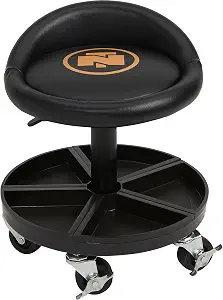
Northern Tool + Equipment 15 1/2in. XL Series Roller Seat with Tool Tray
Northern Tool + Equipment 15 1/2in. XL Series Roller Seat with Tool Tray (ASIN B08KHRJ91V)
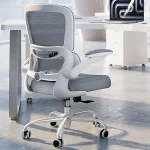
Best for moving between nearby work areas while seated is the editorial label for this roller seat. Its five swiveling, 3in. polypropylene casters distinguish its stated setup from the adjustable swivel shop stool. The seat itself is vinyl, measures 15 1/2in. dia., and swivels 360 degrees. The product name also identifies a tool tray. Together, these details make it worth considering for a routine that combines seated work with repositioning, rather than for someone choosing primarily by seat height or a truck-storage need.
The seat height adjusts from 19.7in. to 24.4in., and the unit holds up to 400 lbs. Compare that range with your work surface and preferred seated position before deciding. Its height range differs from the other stool’s, so choosing between the two should begin with the actual working height you need, not with the general idea of a shop seat. The casters are a stated movement feature; they do not by themselves tell you whether the seat suits the floor, clearances, or workflow in your particular space. Check those practical conditions independently.
A Black Friday offer should be evaluated against the exact roller-seat listing and its details, especially if you are comparing it with the stool. The two products share a 360-degree swivel seat and a 400 lbs. capacity, but their stated height ranges and movement features differ. This one has five swiveling casters and is described as a roller seat with tool tray. Those distinctions may matter more than a seasonal banner if the job calls for changing position while seated. Its tradeoff is practical: the relevant questions are whether the lower listed height range suits your work and whether the rolling format fits your work area. Best for moving between nearby work areas while seated describes a likely use based on the listed casters; it is not a test result or a claim that it is best for every shop.
Key specs
Seat diameter
15 1/2in. dia.
Seat swivel
Swivels 360 degrees
Height adjustment
adjust the seat height from 19.7in. to 24.4in.
Weight capacity
holds up to 400 lbs.
Casters
5 swiveling, 3in. polypropylene casters
Seat material
Seat Material Vinyl
Separate truck storage from shop seating
Begin by deciding which kind of problem you are solving. The crossover box is the only listed product intended as a truck tool box, with dimensions of 69″L x 13″W x 12″H and capacity of 677 cubic inches. The two seats answer different workshop needs: one is an adjustable swivel shop stool, and the other is a roller seat with a tool tray and five swiveling casters. Comparing all three as though they were alternatives for one task can distract from the useful question: what needs to change in your routine?
For storage, make a list of the equipment you intend to keep in the box and compare its shape and volume with the box’s stated measurements and capacity. For seating, identify the work surface and whether you want to remain in one general position or reposition while seated. These are separate checks, not promises that a product will fit a particular truck, station, or floor. A Black Friday shortlist becomes more useful when it follows those needs first. Then compare the exact offer and variant against the item you actually meant to consider, rather than letting the category or banner make the decision for you.
Let the dimensions answer the first fit questions
Numbers are most useful when tied to a specific constraint. For the box, compare 69″L x 13″W x 12″H with the space available and the items you intend to store. Its 677 cubic inches of capacity gives another way to think about storage, but volume does not describe the shape of every object you may carry. The listed 1 compartment is relevant too: decide whether one main area matches your organization plan. If the arrangement is important, resolve that question before you weigh a seasonal offer.
For the seats, height is a practical filter. The shop stool adjusts from 27.5in. to 32in.H; the roller seat adjusts from 19.7in. to 24.4in. Compare the appropriate range with your work position rather than assuming that a seat labeled “adjustable” will suit every station. Their seat diameters are also stated, so consider those measurements alongside the available space. Black Friday may make comparison timely, but the measurements remain the useful starting point. Confirm that the exact listing corresponds to the product and variant you evaluated before making a purchase decision.
Choose movement that matches the sequence of work
Movement separates the two seats in a useful way. Both seats swivel 360 degrees, so each offers a turning seat. The roller seat additionally lists five swiveling, 3in. polypropylene casters. That feature makes it the more directly relevant option here if your routine includes repositioning while seated between nearby tasks. The shop stool instead lists an extra-heavy-duty steel frame with chrome finish and a bottom ring that serves as a footrest. Its details support a different set of priorities; avoid treating either design as automatically right for every workspace.
Think through a typical work sequence: where you sit, what you need to reach, and whether you expect to move the seat during the task. Then consider whether the height range is suitable and whether rolling movement makes sense for the space. The product facts do not establish how either seat behaves on your particular floor or around your equipment, so those conditions need your own consideration. For a Black Friday comparison, distinguish a seat that swivels from one that also specifies casters. That small distinction can clarify which listing deserves attention without relying on an advertised deal to define your needs.
Read capacity and construction in context
Capacity figures should answer a relevant question, not serve as a general quality guarantee. The shop stool and roller seat each list a 400 lbs. weight capacity. If that figure matters to your decision, compare it with your requirement while also checking the seat dimensions and height range. The box has a different kind of capacity figure: 677 cubic inches. That indicates listed storage volume, not a weight rating. Keep those meanings separate when you compare products, since a seat’s weight capacity and a box’s volume address different needs.
The box is aluminum with 0.045in. thick walls and weighs 29 pounds. The stool’s frame is extra-heavy-duty steel with a chrome finish, and its seat is vinyl with soft foam padding. The roller seat lists a vinyl seat and polypropylene casters. These material and construction details can help you decide which attributes deserve attention, but they do not establish durability or performance in your particular conditions. During Black Friday, check that the offer refers to the exact item whose specifications you considered; do not infer a better fit or construction from promotional language alone.
Make the seasonal offer pass a practical check
A sensible Black Friday comparison begins with identity: confirm the product name and variant in the offer, then compare the listed characteristics that mattered to your shortlist. For the box, those may be its measurements, capacity, material, wall thickness, and one-compartment layout. For the seats, compare the specific height range, seat details, capacity, and movement features. This helps prevent a broad category label from being mistaken for the exact item you researched.
Next, decide whether the offer is relevant to your actual job. A price promotion cannot resolve a mismatch between a storage box’s dimensions and the space available, or between a seat’s height and your preferred work position. No active promotion or savings are established here, so check the listing for the terms of the exact offer rather than assuming a discount. If the product and features match your need, the offer can be considered on its own terms. If not, keep the purchase decision anchored to the job, not the seasonal timing.
Make your Black Friday choice
These Northern Tool picks cover distinct jobs: the aluminum box provides a defined truck-storage option, the adjustable shop stool offers a swiveling seat with a footrest, and the roller seat adds specified casters for seated repositioning. Start with the space, working height, and movement your routine requires, then compare the corresponding product details. Black Friday can be a useful occasion to check an exact listing, but it does not establish that an offer is active or that a product is the right fit. Verify the product and variant, review the relevant specifications, and choose according to the task you need to support.