 Check Price on Amazon
PowerColor Reaper AMD Radeon RX 9070 XT 16GB GDDR6 Buying Guide — Black Friday Deals 2026
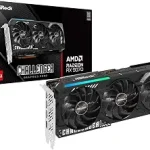
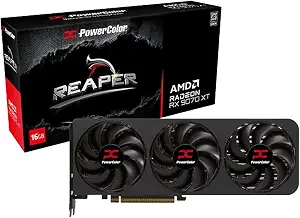
A Black Friday graphics-card search is most useful when it begins with the build and display setup you already have, rather than with a deal headline. The PowerColor Reaper is built around an AMD Radeon RX 9070 XT graphics processor and 16 GB of graphics memory; its listed clock speed is 2400 megahertz. Those details identify the configuration, but they do not by themselves establish how it will perform in a particular system or whether it suits every buyer. This guide focuses on the practical checks you can make from the available specifications: how you plan to use its display outputs, whether the stated power requirement fits your system, and whether the card’s dimensions work with your case. During Black Friday, those questions help keep attention on the exact item and variant you intend to purchase.
This card may suit a shopper who wants the listed RX 9070 XT configuration and values having three DisplayPort outputs alongside HDMI. Its connectors are 1 x HDMI 2.1 and 3 x DisplayPort 2.1, so start by writing down which displays you intend to connect and which ports those displays require. That simple inventory makes it easier to assess whether the output arrangement is relevant to your setup, without assuming that a port count alone guarantees a particular experience. The 16 GB of graphics memory and 2400 megahertz clock speed are useful identifiers when comparing listings for this model, not promises about results in any specific game or application.
A practical editorial fit is Best for shoppers prioritizing three DisplayPort connections: that label reflects the listed output mix, not a claim of measured superiority. The tradeoffs to weigh are equally concrete. The card has two 8-pin PCI Express Power Connector inputs, a stated minimum system power of 750W, and dimensions of 289 * 111 * 41 mm. Check all three against your planned system before deciding. For Black Friday, compare the exact listing and configuration you are considering; do not treat a headline as confirmation that the item, specifications, or offer details match your needs.
Start with the displays you actually plan to connect
The output layout is a useful way to decide whether this card belongs on your shortlist. It provides 1 x HDMI 2.1 and 3 x DisplayPort 2.1. If your setup uses several DisplayPort connections, that mix may be more relevant to you than it is to someone planning around a single HDMI connection. Write down the ports required by each display, then compare that list with the card’s stated outputs. This is a compatibility check for your intended arrangement, not a claim that every display or cable combination is guaranteed.
Black Friday listings can make it tempting to decide from the product name alone. Pause to confirm that the listing refers to the exact PowerColor Reaper configuration and that its connection details are the ones you expect. If your display plan may change, consider whether the listed output mix gives you the connections you want to prioritize. If you are unsure about a particular display or cable, verify those requirements separately before ordering rather than assuming the connector labels answer every setup question.
Treat the power figures as a system-wide planning check
The listed power details are two 8-pin PCI Express Power Connector inputs and a 750W minimum system power requirement. Use these as prompts to inspect your planned build: check the power supply information available to you and confirm that the required connectors are accounted for. The minimum system power figure is not, on its own, a complete assessment of every component in a system, so avoid treating it as a universal guarantee that a particular build is suitable.
Make this check before a Black Friday purchase, when attention can be drawn toward the offer rather than the work needed to install a component. If you cannot confirm the available connectors or how the stated requirement applies to your system, resolve that uncertainty before checkout. This is especially useful for shoppers upgrading an existing computer: decisions should be based on the system they intend to use, not just on the graphics-card specifications in isolation.
Use the card dimensions to assess your planned installation
The listed dimensions are 289 * 111 * 41 mm. Compare that exact measurement with the space available in your case and the layout of the system you plan to build. Do not rely on a general sense that a card looks compact or large; the available facts do not describe your case or the surrounding components. If your case documentation gives relevant measurements, use those to make the comparison before placing an order.
For a Black Friday shortlist, make physical fit a separate decision from price or product naming. A listing may identify the right GPU and still leave you with a fit question that only your build information can answer. Keep the stated dimensions unchanged while checking them against your own case measurements. If you are planning a new build, assess the card as part of that build plan rather than assuming the dimensions will suit a case you have not selected.
Read the memory and clock as configuration details
This model is listed with 16 GB of graphics memory and a 2400 megahertz GPU clock speed. Those figures help distinguish the configuration you are considering from listings with different names or specifications. They are not enough to predict frame rates, application behavior, or suitability for a particular workload, so keep your decision grounded in the needs and requirements you can verify for yourself.
During Black Friday comparisons, check that both figures appear on the exact listing you mean to evaluate, along with the graphics processor name. This helps prevent a broad search result or similar-looking product title from standing in for a configuration check. If these are the details that brought the card onto your shortlist, use them as identifiers, then weigh them alongside the connections, power requirement, and physical dimensions.
Make the Black Friday comparison about the exact item
A useful comparison starts by confirming the model and its listed specifications, then considering whether they suit your own setup. Check the AMD Radeon RX 9070 XT graphics processor, 16 GB of graphics memory, 2400 megahertz clock speed, connector arrangement, power details, and dimensions against the needs you have written down. Keep the exact configuration in view if you compare multiple listings, and distinguish verified product details from promotional wording.
Do not assume that a Black Friday headline establishes an active promotion, a particular saving, or that every listing refers to an identical configuration. Compare the offer information actually shown for the item you intend to buy, and make your choice using details you can confirm. If one of your core questions—display connections, system power, or physical clearance—remains unresolved, treat that as a reason to pause rather than letting the seasonal framing make the decision for you.
Key specs
| Graphics processor | AMD Radeon RX 9070 XT |
| Graphics memory | 16 GB |
| GPU clock speed | 2400 megahertz |
| Display connectors | 1 x HDMI 2.1 , 3 x DisplayPort 2.1 |
| Power connectors | Two 8-pin PCI Express Power Connector |
| Minimum system power | 750W |
| Card dimensions | 289 * 111 * 41 mm |
Make your Black Friday choice
The strongest reason to shortlist this card is a match between its stated specifications and the system you are planning: the RX 9070 XT configuration, 16 GB of graphics memory, a three-DisplayPort output mix, and clearly listed power and size details. The important checks are personal ones: confirm your display connections, review the stated power requirement, and compare 289 * 111 * 41 mm with your available case space. Black Friday can be a useful time to compare the exact item and offer, but a headline should not replace those checks. Choose only after the configuration and your own build requirements line up.