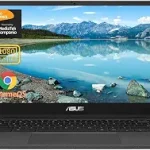
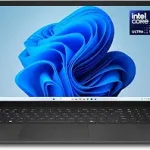
Dell 15.6 Laptop, FHD, Intel Core 3 100U, 8GB RAM, Windows 11 Home (ASIN B0H5X2GC1Y)
Best Windows Laptop Buying Guide — Black Friday Deals 2026
A Windows laptop purchase is easier when you begin with the routine it needs to support: where you look at the screen, which applications you rely on, how much room you need for files, and whether you carry the computer. These listings present three different priorities: a compact Surface configuration, a large OLED display from HP, and a Dell with a 15.6-inch screen and 8 GB of memory. For Black Friday, treat the advertised offer as only one part of the decision. Check that the exact model and configuration match the features you want, then weigh those details against your budget and intended use. The recommendations below identify a useful starting point for each kind of shopper, not a claim of measured superiority.
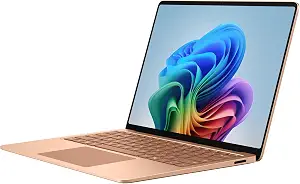
Best Overall: Microsoft Surface Laptop (2026) is a balanced place to begin if you want a relatively compact screen while retaining a higher-resolution panel and a listed 16 GB of memory. Its 13.8-inch display has a 2304 x 1536 resolution, and the configuration combines a Snapdragon X2 Elite processor with 512 GB of storage. Windows 11 Home is listed as the operating system. For a routine that moves between writing, browsing and keeping a working collection of files, those details give you a specific configuration to evaluate rather than a vague promise of general-purpose capability.
The display size may suit someone who wants a screen that occupies less space on a table than a larger-panel option, while its resolution is a distinct consideration for anyone who values a more detailed display. Neither specification tells you how comfortable the screen will feel for your own layout, font choices or viewing distance, so consider the programs you use and how much material you prefer to keep visible at once. If you regularly work with a large number of windows side by side, compare that preference with the larger HP display before deciding.
The processor name is useful when checking requirements for the software you intend to use. Do not assume that a processor label alone settles whether your particular applications, accessories or workflows are a fit; verify those requirements for the exact configuration. The listed 16 GB memory and 512 GB storage are separate planning points: one describes installed memory, while the other gives the storage capacity. Think about the programs you keep open and the files you want available locally, then compare those needs with the stated amounts.
Bluetooth 5.4 is the listed wireless connectivity detail, so check it against the wireless devices you plan to use. The supplied facts do not specify a Wi-Fi standard, so confirm the complete connectivity information in the listing if your network needs make that important. During Black Friday, inspect the selected variant carefully: a similar product name is not enough to establish that the processor, memory, storage, display and operating system match this configuration. This is the Best Overall choice here because its listed combination covers several common decision points, not because the label proves it outperforms every alternative.
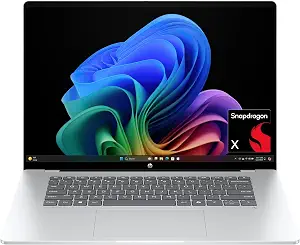
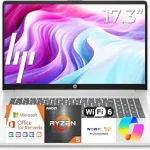
Best for a large OLED screen: the HP OmniBook 5 16 inch places its display at the center of the decision. Its 16-inch diagonal OLED panel has a 2K resolution of 1920 x 1200. If you often settle in one place to read, draft, or arrange work across a broad screen, that size and panel type may make this configuration worth comparing. The display figures describe the panel; they do not determine whether its size suits your desk, viewing distance or preferred workspace. Consider those practical details before treating a larger screen as an automatic advantage.
The listed processor is a Snapdragon X X1-26-100, specified as up to 2.97 GHz with 8 cores. It is paired with 16 GB of onboard LPDDR5x-8448 MT/s memory and a 512 GB PCIe Gen4 NVMe M.2 SSD. Use the processor name as a prompt to check the requirements of your own programs, rather than as a substitute for that check. The memory and storage figures can help you compare the HP with other exact configurations, but they do not tell you how much room your own projects, downloads or installed applications will occupy.
For calls, the listed camera is an HP True Vision 1080p FHD IR camera with temporal noise reduction, alongside integrated dual array digital microphones. Those are relevant details if camera and microphone specifications are part of your buying checklist. Check that the camera features and the rest of the configuration meet your needs; the supplied information does not establish how a particular call will look or sound in your room. Wi-Fi 6E (2×2) Dual Band Simultaneous (DBS) and Bluetooth 5.3 are the stated wireless details. Compare them with your network and devices rather than assuming they resolve every connection requirement.
The listing does not provide an operating-system detail in the supplied specifications, so verify that information on the product page before purchase if it is essential to your choice. Black Friday can make it tempting to focus on the large OLED display first, but confirm the processor, onboard memory, SSD and selected model as well. The Best for a large OLED screen label reflects the distinctive display facts available here; it is a guide to a feature priority, not a measured claim about picture quality or overall value.
Key specs
Display
16″ diagonal, 2K (1920 x 1200), OLED
Processor
Snapdragon X X1-26-100 (up to 2.97 GHz, 8 cores)
Memory
16 GB LPDDR5x-8448 MT/s (onboard)
Storage
512 GB PCIe Gen4 NVMe M.2 SSD
Wireless
Wi-Fi 6E (2×2) Dual Band Simultaneous (DBS) and Bluetooth 5.3 wireless card
Camera
HP True Vision 1080p FHD IR camera with temporal noise reduction and integrated dual array digital microphones
Dell 15.6 Laptop, FHD, Intel Core 3 100U, 8GB RAM, Windows 11 Home
Dell 15.6 Laptop, FHD, Intel Core 3 100U, 8GB RAM, Windows 11 Home (ASIN B0H5X2GC1Y)
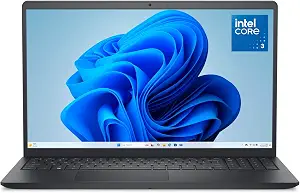
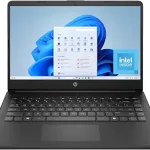
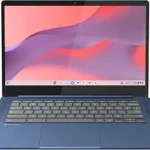
Best Budget: the Dell 15.6 Laptop is the straightforward option to investigate when you want a familiar display size and want to keep the listed configuration focused. It has a 15.6-inch display with a 1920 x 1080 pixel resolution, an Intel Core 3 100U processor, 8 GB of memory and 512 GB of storage. Windows 11 Home is specified. These details make it possible to compare the Dell against a budget limit using the actual configuration, rather than choosing on the basis of the model name alone.
Memory is the main distinction to consider when comparing this configuration with the two options listed here that have 16 GB. That difference does not by itself establish which laptop will suit your programs: make a list of the applications you expect to use and check their requirements against the computer you are considering. If your routine is modest, the Dell may be worth keeping on the shortlist; if your applications call for more memory, treat that as a reason to investigate other configurations rather than assuming the listed amount will be enough.
The 512 GB storage figure gives you a concrete starting point for thinking about local files. Estimate what you want on the laptop itself, including any large working files, and decide whether that capacity aligns with your plan. Wi-Fi 6 is the stated wireless connectivity standard. The listing also gives a weight of 3.6 pounds and battery capacity of 41 watt-hours. Weight can help you decide whether the laptop’s carrying burden fits your routine; battery capacity is not a runtime estimate, so do not use it alone to predict how long the computer will last between charges.
During Black Friday, compare the Dell’s exact processor, memory, storage, display and Windows 11 Home details with the configuration attached to the offer. Confirm the selected listing is for this model and not a different variation with a similar name. The Best Budget label means this is the budget-oriented recommendation among the products in this guide; without verified prices, it does not promise the lowest market price or establish a specific saving. Let your application needs and total configuration decide whether it merits the purchase.
Key specs
Display
15.6 inches
Resolution
1920 x 1080 pixels
Memory
8 GB
Storage
512 GB
Operating system
Windows 11 Home
Wireless connectivity
Wi-Fi 6
Weight
3.6 pounds
Battery capacity
41 watt-hours
Sketch the day before choosing a machine
Start with a short account of what the laptop must do in an ordinary week. Write down the applications you expect to use, whether you tend to keep several open, where you usually work, and what files you need stored locally. Then use those needs to examine the three configurations. The Surface pairs a Snapdragon X2 Elite with 16 GB of memory and 512 GB of storage. HP lists a Snapdragon X X1-26-100, 16 GB of onboard memory and a 512 GB SSD. Dell lists an Intel Core 3 100U, 8 GB of memory and 512 GB of storage. Those are useful comparison points, not a substitute for checking each application’s requirements.
Next, separate must-haves from preferences. A required program, a preferred display size and a wireless-device need should not all receive the same weight. If an application has specific processor or memory requirements, confirm that the intended configuration meets them before adding it to your shortlist. If the display is the deciding factor, compare the stated panel size and resolution with your normal working position. For Black Friday, this exercise helps prevent a promotional headline from outranking a requirement that matters every day. The better choice is the one that fits your planned workload, not necessarily the one with the most prominent specification.
Picture the screen in its usual setting
Screen size and resolution describe different parts of the viewing decision. The Surface has a 13.8-inch display at 2304 x 1536; the HP has a 16-inch diagonal OLED display at 1920 x 1200; the Dell has a 15.6-inch display at 1920 x 1080 pixels. These figures let you distinguish the listed panels, but they cannot decide your preferred text size, viewing distance or arrangement of windows. Think about whether you want a more compact screen or prefer a larger panel for the way you organize work.
Consider where the laptop will usually sit and how often its display will be your primary workspace. Someone who values the listed OLED panel may put the HP near the top of the list, while someone drawn to the Surface’s stated resolution and smaller display may prefer to examine that model closely. The Dell offers a different combination of screen size and resolution. These are personal fit questions, not guarantees about comfort or visual quality. As Black Friday offers appear, compare the screen specifications on the exact selected model, then decide whether the display tradeoff makes sense for your routine.
Make application requirements part of the shortlist
A processor name is a starting point for research, not a promise that every application will suit a laptop. The products list Snapdragon X2 Elite for the Surface, Snapdragon X X1-26-100 for the HP and Intel Core 3 100U for the Dell. Before choosing, identify any software that is essential to your work and check its stated requirements for the specific processor and configuration. If you depend on particular accessories or a specialized workflow, verify those needs separately. The supplied specifications do not settle compatibility for every program or peripheral.
Memory is another distinct check. The Surface and HP list 16 GB, while the Dell lists 8 GB. Think about the programs you expect to keep active together and consult their requirements rather than assuming a general rule. The HP specifies onboard LPDDR5x-8448 MT/s memory; treat that wording as part of the exact configuration when comparing offers. Black Friday can put similar product names next to different configurations, so make sure any comparison uses the processor and memory amounts you actually intend to buy. If a requirement remains unclear, pause to confirm it instead of relying on a headline.
Give local files their own capacity check
Each laptop here lists 512 GB of storage, but that shared capacity does not mean every shopper will use it in the same way. Consider the files and applications you expect to keep on the computer itself: active projects, downloaded material and personal documents can all affect how much room you want available. If you already know the size of a working file collection, use that as a practical reference. If you do not, take time to estimate rather than assuming a listed capacity will match every future need.
Keep storage and memory separate in your comparison. Storage is the stated space for files; memory is listed as 16 GB for the Surface, 16 GB onboard for the HP and 8 GB for the Dell. One figure should not be used as a substitute for the other when reviewing application requirements. The HP identifies its storage as a 512 GB PCIe Gen4 NVMe M.2 SSD, while the other supplied entries give 512 GB without the same additional description. During Black Friday, compare the storage wording and configuration attached to the exact item, and choose based on your own plan for local files.
Check the details that affect everyday setup
Wireless needs can narrow a close decision. The Dell lists Wi-Fi 6. The HP lists Wi-Fi 6E (2×2) Dual Band Simultaneous (DBS) and Bluetooth 5.3, while the Surface lists Bluetooth 5.4. Compare the stated details with the network and wireless devices you expect to use. The supplied Surface specifications do not state a Wi-Fi standard, so check the product listing if that information matters to your setup. A wireless label is a useful checkpoint, not a guarantee about a particular network or device.
The HP lists an HP True Vision 1080p FHD IR camera with temporal noise reduction and integrated dual array digital microphones. That may be worth prioritizing if camera and microphone specifications are important in your selection. For carrying considerations, the Dell is listed at 3.6 pounds; no weight figures are supplied here for the other two products. The Dell’s 41 watt-hours is a battery-capacity specification, not an estimate of runtime. Make Black Friday comparisons on features you can verify, and avoid turning a capacity or camera description into a promise about your experience.
Make your Black Friday choice
A sound shortlist begins with the details most closely tied to your plans: application requirements, screen preference, memory, local storage, wireless setup and carrying needs. The Surface is the Best Overall recommendation in this group, HP is the Best for a large OLED screen, and Dell is the Best Budget choice; each label describes an editorial role among these listed products, not a measured ranking. For Black Friday, confirm the precise model and specifications before comparing the offer, and do not let a deal headline replace a configuration check. Choose the Windows laptop whose stated features best match the work and routines you already expect.