Samsung 100-Inch Class M90H Series, Mini LED, 4K, Smart TV, 2026 Model (ASIN B0GXC1141J)
Best Size100Inch Tv Buying Guide — Black Friday Deals 2026
A 100-inch TV is a room-shaping purchase, so the right choice depends on more than a Black Friday banner. These three models share a 4K resolution, but their listed display technologies, connection details, HDR formats, audio information, and operating systems differ. Start with how you watch: perhaps you want a straightforward Fire TV setup, several HDMI-connected devices, or a set with listed Bluetooth and Wi-Fi connectivity. Then check whether the intended location and mounting plan make sense for a screen this size. During Black Friday, compare the exact model and included specifications shown on the offer, not just the event label. The guide below links each model’s listed details to practical priorities without assuming that one feature makes a TV best for every household.
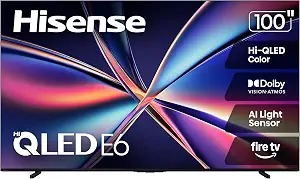
Hisense 100″ Class E6 Series QLED 4K UHD Smart Fire TV (100E6QF, 2025 Model)
Hisense 100″ Class E6 Series QLED 4K UHD Smart Fire TV (100E6QF, 2025 Model) (ASIN B0FHM6B1ZS)
Best Overall is an editorial pick for shoppers who want a broad collection of listed picture and built-in sound details in one 100-inch television. The Hisense E6 Series combines LCD, LED, and QLED display technology with 4K resolution. Its 144 hertz refresh rate and support for Dolby Vision, HDR10, HDR10+, HDR10+ Adaptive, and HLG give buyers a substantial set of picture specifications to compare with the sources they plan to watch. Those formats are useful decision points: check what HDR formats matter for your viewing sources rather than treating a longer list as a guarantee of a particular experience.
The built-in audio is specified as 2.1 channel speakers with Dolby Atmos and 50W total output power. That makes this model worth considering if you want to weigh the supplied sound details as part of the TV decision, instead of focusing only on the screen. The specifications do not establish how it will sound in a particular room, so consider your own listening preferences and whether you plan to use the built-in speakers or assess a separate audio setup. FireOS is the operating system listed here; check the exact listing for the services and interface details you personally need.
For Black Friday, treat the Hisense’s wide-ranging HDR list and specified audio as a reason to examine the exact offer, not as proof of a discount or an automatic match. Confirm that the product variant is the 100E6QF, 2025 Model, and compare its listed 4K, 144 hertz, and FireOS details with the other candidates. This pick suits shoppers who want one shortlist entry that brings together QLED display technology, several named HDR formats, and a clearly specified built-in speaker configuration. It may be less compelling for someone whose main deciding factor is a particular port count or wireless specification, neither of which is included in the provided facts.
Key specs
Screen size
100 inches
Display technology
LCD, LED, QLED
Resolution
4K
Refresh rate
144 hertz
HDR formats
Dolby Vision, HDR10, HDR10+, HDR10+ Adaptive, HLG
Audio
Built-in 2.1 ch speakers with Dolby Atmos, 50W total output power
Operating system
FireOS
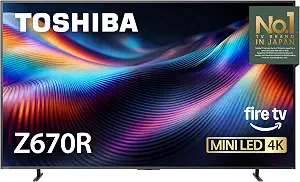
Toshiba 100″ Z670 Series Mini-LED 4K UHD Smart Fire TV (100Z670R)
Toshiba 100″ Z670 Series Mini-LED 4K UHD Smart Fire TV (100Z670R) (ASIN B0GNT537KR)
Best for HDMI-connected setups is a label based on a concrete listed detail: the Toshiba Z670 Series has four HDMI ports. If your planned arrangement includes multiple HDMI-connected devices, that port count gives you a useful starting point for comparing the set with your equipment list. Write down the devices you expect to connect and check that the product variant in the Black Friday offer is the 100Z670R. The port count alone does not describe every connection capability, so use the listing to verify any further requirements before deciding.
The television is listed with Mini LED and QLED display technology, 4K resolution, a 144 hertz refresh rate, and support for Dolby Vision, HDR10, HDR10+, HDR10+ Adaptive, and HLG. These are separate considerations, not a promise that every source will use every format. If picture formats matter to you, compare the listed HDR support with the formats associated with the content and equipment you plan to use. A shopper who places more weight on the number of HDMI ports may reach a different shortlist than someone who mainly compares the Hisense’s specified audio or the Samsung’s wireless details.
Mounting is another specific point to check: the Toshiba listing gives a VESA mount standard of 800 x 400 mm. If you intend to mount the TV, compare that exact standard with the mount you plan to use and confirm all fit requirements from the relevant product information. For Black Friday, compare the Toshiba’s exact model and listed configuration against the competing offers, rather than assuming a promotion applies to every version. The distinct appeal here is the combination of a stated HDMI port count and a stated mounting standard, alongside its display specifications. Those details can help narrow a practical shortlist, but the final choice still depends on room fit, equipment, and the offer’s exact variant.
Key specs
Display
Display Technology Mini Led, QLED
Resolution
Resolution 4K
Refresh rate
Refresh Rate 144 hertz
HDR formats
HDR Format Supported Dolby Vision, HDR10, HDR10+, HDR10+ Adaptive, HLG
HDMI ports
Total Number of HDMI Ports 4
Mount standard
VESA Mount Standard 800 x 400 mm
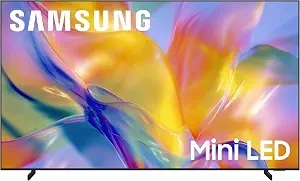
Samsung 100-Inch Class M90H Series, Mini LED, 4K, Smart TV, 2026 Model
Samsung 100-Inch Class M90H Series, Mini LED, 4K, Smart TV, 2026 Model (ASIN B0GXC1141J)
Best for Bluetooth and Wi-Fi connectivity is an editorial label grounded in the Samsung M90H’s listed wireless technologies: Bluetooth and Wi-Fi. Shoppers who want those connection types on their checklist can begin with this model, then confirm that the exact offer is for the 100-Inch Class M90H Series, 2026 Model. The listing also specifies three HDMI ports and two USB ports, giving you additional details to compare with the devices you plan to connect. Make a short inventory before shopping so you can judge those port counts against your intended setup instead of relying on a general impression.
For picture specifications, the Samsung is listed as a 4K television with Mini-LED backlight technology, a 144 hertz refresh rate, and HDR10+ support. That HDR detail is specifically HDR10+; the facts provided do not list additional HDR formats for this model. If format support affects your decision, compare the formats you need with the exact product information and your intended sources. The Mini-LED backlight and refresh-rate details may also help you distinguish what you want to investigate, but they do not establish a performance result for your room or viewing habits.
During Black Friday, this Samsung makes sense to investigate if Bluetooth and Wi-Fi are meaningful priorities alongside its stated ports and picture specifications. Check the exact model name and offer details carefully, and compare the included feature information rather than assuming a banner describes every variant. Its listed wireless technology is a useful point of difference from the two Fire TV models in this guide, whose provided facts identify FireOS but do not specify wireless details. That distinction should not be read as proof that either product lacks a particular connection; it simply gives shoppers a clear reason to examine the Samsung when wireless connectivity is on their personal checklist.
Key specs
Resolution
Resolution 4K
Backlight
Display Backlight Technology Mini-LED
Refresh rate
Display Refresh Rate in Hertz 144
HDR format
HDR Format Supported HDR10+
HDMI ports
Total Number of HDMI Ports 3
USB ports
Total Usb Ports 2
Wireless connectivity
Wireless Technology Bluetooth, Wi-Fi
Give the screen a role before choosing a model
A 100-inch screen deserves a deliberate room plan. Before Black Friday browsing takes over, identify the wall or placement area you have in mind, then check the available space against the exact product information. Consider where viewers usually sit, what else occupies the room, and whether the screen’s intended position works with your furniture and everyday movement. These are household fit questions, not properties that can be settled by a model name alone. If you are considering a mount, treat mounting compatibility as a separate check rather than assuming that any mount suited to another television will work.
The Toshiba provides a VESA mount standard of 800 x 400 mm, a useful specification to compare with a planned mount. That information does not by itself confirm suitability for every mounting arrangement, so verify the relevant requirements for both products. The facts provided for the Hisense and Samsung do not include a mount standard; check their exact listings if mounting is part of your plan. If you expect to use a stand or another placement method, confirm the product details needed for that arrangement too.
Also think about the room’s usual viewing routine. A screen used for group viewing may have different placement priorities from one used mainly by a single viewer, while daylight, seating, and room layout are specific to your home. Do not let a Black Friday deadline replace these checks. Make a simple fit checklist first, then compare models that remain plausible. A compelling offer on a screen that does not suit the planned location is not a useful match, regardless of its feature list.
Sort picture details by what you watch
All three listed televisions have 4K resolution, so that shared specification does not settle the choice among them. Look next at the display terminology and HDR formats, while keeping those categories distinct. The Hisense is described as LCD, LED, and QLED; the Toshiba as Mini LED and QLED; and the Samsung as having Mini-LED backlight technology. These are the supplied descriptions, not a complete account of how each set will look in every room. Use them to organize questions, rather than to assume a viewing result.
The HDR lists provide another useful comparison. Hisense and Toshiba each list Dolby Vision, HDR10, HDR10+, HDR10+ Adaptive, and HLG. Samsung lists HDR10+. If you already know which HDR formats matter for the content or devices you use, check those needs against the model’s exact product details. A longer list may be relevant to your preferences, but it should not be treated as a universal measure of picture quality or as a guarantee that a particular source will use a specific format.
Each model also lists a 144 hertz refresh rate. Consider whether that specification is important to the way you plan to use the TV, and check any device-specific requirements separately. During Black Friday, keep the chosen model and its picture details visible while comparing offers. This helps avoid confusing a similar product name or a different variant with the one you researched. A focused comparison is more useful than trying to rank display terms without knowing which details matter for your own viewing.
Build your connection checklist from the devices you own
Start with the actual equipment you plan to connect. Note which devices use HDMI, how many connections you expect to need, and whether USB ports or wireless technology belong on your checklist. Among these three fact sets, Toshiba specifies four HDMI ports, while Samsung specifies three HDMI ports and two USB ports. Those counts make the two models easier to compare for shoppers who already know their connection needs. The supplied Hisense facts do not give port counts, so check its exact listing if those details determine your purchase.
Wireless details need the same careful reading. Samsung lists Bluetooth and Wi-Fi. FireOS is listed for the Hisense and Toshiba, but that operating-system fact does not establish their wireless specifications. Missing details are a prompt to verify the listing, not a reason to conclude a feature is absent. Likewise, do not infer a particular device will connect simply because a port count looks suitable; confirm the specific connection requirements for your equipment and the exact TV variant.
For Black Friday, compare the offer against your written device list instead of treating port numbers as a general quality score. A shopper with several planned HDMI connections may prioritize the Toshiba’s stated count, while someone focused on Bluetooth and Wi-Fi may want to examine the Samsung first. Those are different needs, not a universal ranking. Verify that the listing refers to the precise model you intended to buy, and resolve any unanswered connection questions before treating the offer as a fit.
Consider sound and software as separate choices
Screen size can dominate a shortlist, but the provided audio and operating-system details may also matter to daily use. Hisense specifies built-in 2.1 channel speakers with Dolby Atmos and 50W total output power. That makes its stated speaker configuration a useful point of comparison for someone who wants audio information included in the decision. The facts do not establish how it will sound in your room, so think about your listening expectations and verify any requirements for a separate audio system rather than assuming a result.
The supplied information identifies FireOS as the operating system for both the Hisense and Toshiba. It does not give an operating-system detail for Samsung, so check the exact product listing if platform choice is important to you. Before Black Friday, note which apps, interfaces, or existing routines you want to confirm. This turns a broad preference for a familiar smart-TV setup into specific questions you can answer from product information, without assuming services or functions that are not listed here.
Keep these decisions independent when possible. A model that draws your attention because of an audio specification may not be the one that best matches your port priorities, and an operating-system preference does not answer a mounting question. Write down which details are essential and which are simply nice to compare. That distinction can prevent a large screen or a sale label from overshadowing practical features you will notice more often.
Make the Black Friday comparison exact
A Black Friday label does not establish that an offer is a promotion, nor does it tell you which configuration is being presented. Compare the exact model name and variant shown with the product you researched: Hisense 100E6QF, Toshiba 100Z670R, or Samsung M90H Series, 2026 Model. Read the offer details for the actual item and its listed specifications. Do not assume that similar naming means two listings describe the same configuration.
Next, compare the details that matter to your checklist. That might mean the Toshiba’s four HDMI ports, the Samsung’s Bluetooth and Wi-Fi, or the Hisense’s specified speaker setup and FireOS. For picture preferences, review each model’s listed display terminology, refresh rate, and HDR formats. If a detail you consider essential is not included in the facts you have, consult the exact listing rather than filling the gap with an assumption. This keeps the comparison honest and model-specific.
Finally, put the offer back into context: room fit, intended connections, mounting plan, and viewing habits should still make sense. Black Friday can make it tempting to choose quickly, but the useful comparison is the one between a specific offer and a specific need. Avoid judging by a general event banner or a single headline feature. If the model, variant, or required detail remains unclear, resolve that uncertainty before making the decision.
Make your Black Friday choice
The best 100-inch TV for your home depends on what you need the screen to do and where it will go. Hisense stands out in this guide for its listed audio configuration and broad HDR-format support; Toshiba offers a specified HDMI count and VESA standard; Samsung lists Bluetooth, Wi-Fi, and its own port details. Those are practical starting points, not universal verdicts. Before choosing during Black Friday, confirm the exact model and offer, check the room and mounting plan, and match the listed specifications to your equipment and preferences. A careful comparison can make a big-screen purchase feel more considered than a quick response to a sale label.