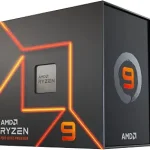
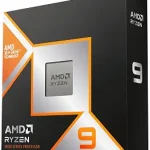
Shopping for the AMD Ryzen 9 9900X3D during Black Friday is less about reacting to a dramatic headline and more about deciding whether its listed specifications fit the computer you want to build. This is a 12-core processor with 24 concurrent threads, a Socket AM5 designation, and a listed wattage of 120 watts. Those details give you useful points to check against your workload, motherboard plans, and system requirements, but they do not tell the whole story of how a particular PC will perform. Treat the holiday listing as a chance to compare the exact processor and offer with your own priorities—not as a reason to assume a discount or a particular result.
The AMD Ryzen 9 9900X3D is best for shoppers prioritizing a 12-core processor, a straightforward label grounded in its listed core count rather than a claim of measured superiority. That count may be relevant if your intended work can make use of multiple cores; the listing also specifies 24 concurrent threads. Think through the applications you actually expect to run, including whether you commonly keep several demanding tasks active. If your needs are modest or you are choosing a processor mainly for a single application, compare the complete system options rather than assuming a larger core and thread count automatically makes this the right purchase.
For a Black Friday decision, write down which specifications are must-haves and which are simply details to investigate. The model name and processor identity should match the item you intend to buy, and the listed Socket AM5 should be checked against your motherboard plan. The product record gives a processor speed of 4.4 GHz, secondary cache of 12 MB, installed cache of 140 MB, and wattage of 120 watts. Keep each label attached to its own figure as you compare the offer. This listing information can help you screen a candidate, but it does not establish a sale price, the suitability of a whole build, or how the processor will behave in your particular setup.
Make the workload—not the model name—the starting point
The 12-core and 24-thread figures give you a concrete way to begin asking whether this processor belongs on your shortlist. Consider the work you want the computer to handle: for example, whether your usual routine centers on one primary task or involves several active applications. These examples are prompts for evaluating your own needs, not claims about application support or a promise of performance. The listing does not specify results for particular programs, so avoid treating the counts alone as proof that a workload will run faster or more smoothly.
A useful Black Friday comparison is between the processor you are considering and the requirements you have already set. If your plans make the listed core and thread counts relevant, keep the 9900X3D in consideration and then check the rest of the build. If you cannot identify a need that makes those figures important, pause before allowing the product name or a promotional presentation to make the decision for you. A clear use case helps you weigh the processor alongside other system priorities without making unsupported performance assumptions.
Check Socket AM5 against your motherboard plans
Socket AM5 is the listed socket for this processor, making it an essential item to verify before placing an order. Check the exact motherboard documentation and the configuration you plan to use rather than relying on a broad assumption about platform fit. Socket information is one part of a compatibility check; the provided product details do not confirm support for a specific motherboard or system. If you are replacing a processor in an existing PC, verify the relevant manufacturer guidance for that exact combination.
This check matters especially when a Black Friday cart includes several components. Keep the processor listing and the motherboard choice together while reviewing the build, and resolve any uncertainty before checkout. That approach is more dependable than choosing a deal first and trying to make other parts fit afterward. The Socket AM5 detail is useful for narrowing your research, but it should not be read as a guarantee that every AM5 board is appropriate for your planned setup.
Keep the speed figure in its stated context
The product information labels 4.4 GHz as the processor speed. Keep that exact label and figure in view when comparing listings, and resist turning it into a promise about everyday speed. The record does not provide results for particular tasks or comparisons with other processors. A single stated speed figure is therefore one detail to review, not a complete basis for predicting how a finished computer will feel in your usual applications.
During Black Friday, compare the exact model and its listed details rather than letting a short specification headline stand in for your needs. If speed is important to your choice, decide what you want to learn beyond the supplied figure and consult the relevant product and system information before purchasing. Do not substitute an assumed feature or performance claim for what the listing actually says.
Read both cache entries without blending them
The listing provides two separately labeled cache figures: 12 MB for secondary cache and 140 MB for installed cache. Preserve those labels when you make notes or compare the product with another listing. They are presented as distinct entries, and the available information does not explain a relationship between them or specify how either figure affects a particular application. Keeping them separate avoids accidentally presenting one as a replacement for the other.
For a Black Friday shortlist, cache can be part of your record of the processor’s specifications, while your actual task requirements remain central to the choice. If you are comparing candidates, check that you are looking at the same kinds of listed details and the correct model. Avoid drawing a real-world performance conclusion from these cache numbers alone; the provided facts do not supply one.
Treat 120 watts as a build-planning detail
The listed wattage is 120 watts. Include that specification when reviewing your planned system, but do not treat it as a complete account of power use or a guarantee about the needs of every finished build. The product information does not provide those broader details. If power planning affects your decision, consider the entire configuration and check the relevant documentation for the components you intend to use.
This is a practical moment to slow down during Black Friday shopping. Review the processor, motherboard, and other planned parts as a system rather than assuming the processor’s wattage settles every power question. If an offer seems attractive but you have not resolved a build requirement, keep researching instead of letting the holiday framing rush you. The goal is to purchase a processor that fits a considered plan, not simply to secure a listing.
Compare the offer and listing before you commit
Black Friday can make comparison shopping more urgent, but the supplied product details do not establish a current promotion, price, stock status, or seller policy. Check the exact offer available to you and confirm that it identifies the AMD Ryzen 9 9900X3D you intend to buy. Compare the complete terms shown at checkout, and do not assume that a headline applies to this particular item or variant.
A simple decision rule can help: proceed only when the listing identity, your motherboard research, and your workload priorities all make sense together. If one of those checks remains unsettled, save the candidate for later review. This processor’s 12 cores, 24 concurrent threads, Socket AM5, and other stated specifications offer useful comparison points; none replaces verifying the details of the actual offer.
Key specs
Processor speed
4.4 GHz
Socket
Socket AM5
Secondary cache
12 MB
Wattage
120 watts
Installed cache
140 MB
Concurrent threads
24
Processor cores
12
Make your Black Friday choice
The AMD Ryzen 9 9900X3D merits consideration if its listed core and thread counts align with the kind of computer you plan to assemble, and if your platform research supports continuing with a Socket AM5 processor. Keep the 4.4 GHz speed, both separately labeled cache figures, and 120-watt wattage in their stated contexts rather than reading them as promises about application results. On Black Friday, verify the exact listing and offer, then make the purchase only when the processor fits your broader build plan. A deliberate comparison is more useful than a holiday headline.
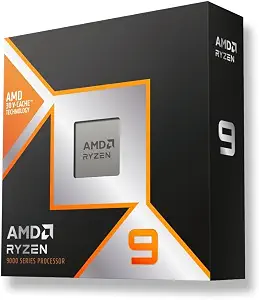 Check Price on Amazon