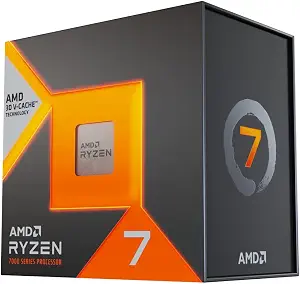
Is the AMD Ryzen 7 7800X3D the right fit for your next desktop, or does its specification sheet leave important questions for your build plan? This guide focuses on the details provided for this single processor and the practical checks they support. During Black Friday, treat the listing as a starting point: confirm the exact model and offer shown, then decide whether its socket, core and thread counts, cache, and other stated details suit your needs. No sale price or promotion is assumed here.
The AMD Ryzen 7 7800X3D is listed as an 8-core, 16-thread desktop processor with an AM5 socket. Those are useful first-pass details for someone choosing a processor for a planned desktop build: check that the motherboard under consideration is specified for the same socket, then consider whether the listed core and thread counts align with the work you intend to do. The figures describe the processor; they do not, by themselves, establish how a particular application will perform. For Black Friday shopping, make sure the listing you are comparing names this exact model rather than relying only on a similar-looking product title.
The provided listing gives a processor speed of 4.2 GHz, 8 MB L2 plus 96 MB L3 cache memory, a graphics frequency of 2200 MHZ., and a maximum operating temperature (Tjmax) of 89°C. It also specifies 5 nm process technology. These are concrete entries to compare with your own requirements, not a promise of results in a particular setup. If any one of these details is central to your decision, check that it appears on the exact product page you plan to buy. Black Friday listings can make it tempting to focus on the offer headline; taking a moment to verify the model and the relevant specifications keeps the decision tied to the processor you actually intend to select.
Start with the AM5 fit, then check the complete build
The AM5 socket is the clearest compatibility checkpoint in the supplied details. Before adding this processor to a Black Friday cart, compare its listed socket with the motherboard’s stated socket. Do not treat a deal headline or a broadly similar model name as a substitute for that check. If your planned board or other build choices are not settled yet, pause to confirm the exact combination from the relevant product listings rather than assuming a fit.
Socket matching is a starting point, not a complete build review. The provided processor facts do not specify other system requirements, so check the motherboard and other components against their own documentation and listings. This matters especially when you are comparing multiple Black Friday offers: a lower-looking headline is not useful if you have not established that the selected parts suit your intended build. Keep the 7800X3D’s exact name visible while comparing variants, and verify it again before checkout.
Choose around the listed eight cores and 16 threads
The 8-core, 16-thread configuration gives you a clear specification to weigh against your everyday plans. Think about the applications and tasks you expect to run, and compare their stated requirements with the processor details available to you. These counts can help organize a shortlist, but they do not establish a particular level of performance or guarantee how a workload will behave. Black Friday is a useful time to compare options, provided you judge each one against your own needs rather than the size of an offer headline.
If your priorities are still broad, write down the tasks that matter most before choosing. Then decide whether this model’s core and thread listing fits the kind of system you want to put together. The product information here does not compare it with another processor, so avoid treating the counts as proof that it is faster or better than an alternative. Use them as specific details to verify alongside application requirements and the rest of your planned configuration.
Read the clock and cache details as specification entries
The listing states a processor speed of 4.2 GHz and 8 MB L2 plus 96 MB L3 cache memory. Those figures can help you compare product pages when clock speed or cache is part of your selection criteria. They do not explain how a particular application uses those resources, so connect them to reliable requirements for your intended tasks instead of making assumptions from the numbers alone. During Black Friday, check that the listing uses the same model name and reports the details you care about.
It can also help to keep a short comparison note with the exact terms used on each product page. That makes it easier to distinguish cache entries and speed specifications without relying on promotional wording. If the listing you are considering does not make a detail clear, verify it before deciding rather than filling the gap with an assumption.
Use the graphics and temperature figures carefully
The provided facts include a graphics frequency of 2200 MHZ. and a maximum operating temperature (Tjmax) of 89°C. Treat both as listed specifications, not as a complete explanation of graphics capability or expected temperatures in your particular system. The supplied information does not describe a workload, configuration, or operating result. If either entry affects your decision, look for the same detail on the exact listing and consult the relevant product documentation for context.
For a Black Friday comparison, keep these figures in their proper scope. A graphics-frequency entry alone does not answer every question you might have about intended graphics use, and a maximum operating temperature is not a prediction of the temperature your build will reach. Check the details that matter to your plans, and avoid drawing conclusions beyond what the listing states.
Make a Black Friday comparison that survives checkout
Compare the exact product name, model, and stated specifications across the listings you are considering. Then review the offer shown at checkout rather than assuming a headline tells the whole story. This guide does not claim an active Black Friday promotion, a particular price, or a saving. Your decision should depend on the exact offer and the details presented for the item you select, not on a general seasonal label.
Before placing an order, revisit your build checklist: AM5 socket, the listed 8 cores and 16 threads, and whichever other provided specifications matter for your use. Confirm the selected page still identifies the AMD Ryzen 7 7800X3D. That simple final review can help prevent a comparison between different models or variants from steering your choice.
Key specs
Socket
Processor Socket Socket AM5
Processor speed
Processor Speed 4.2 GHz
Core count
Processor Core Count 8
Concurrent threads
Processor Number of Concurrent Threads 16
Graphics frequency
Graphics Frequency : 2200 MHZ.
Maximum operating temperature
Maximum Operating Temperature (Tjmax) : 89°C.
Cache
8 MB L2 plus 96 MB L3 cache memory
Process technology
5 nm process technology
Make your Black Friday choice
The AMD Ryzen 7 7800X3D is worth considering when its AM5 socket and listed specifications fit the desktop you are planning. For Black Friday, finish with an exact-listing checklist: verify the model name, match the socket with your motherboard’s stated socket, review the specifications relevant to your tasks, and compare the offer actually shown for the selected item. That keeps the choice grounded in your build priorities rather than an assumed promotion.