Best Bambu 3D Printer Buying Guide — Black Friday Deals 2026
A Bambu 3D printer purchase starts with the jobs you want it to do, not the Black Friday banner. Decide whether an enclosure, automatic calibration, multi-color printing or filament drying matters to your projects, then compare the exact model and configuration offered. The P1S Combo, P2S Combo and A1 each emphasize different features, and a bundle name alone does not answer every setup question. Use this guide to narrow your priorities, check the relevant specifications and verify what the actual Black Friday offer includes before deciding.
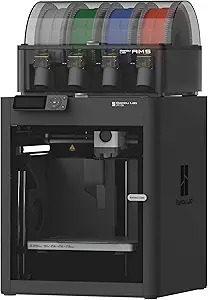
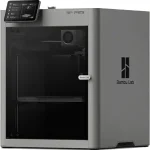
The P1S Combo earns the Best Overall label here because its listed features address several different project considerations: an enclosed body, automatic bed leveling, broad filament guidance and a route to multi-color printing. That combination can make it a useful candidate if your work varies from ordinary single-color prints to designs where multiple colors or materials are part of the plan. The label is an editorial choice among these featured models, not a claim of measured superiority or a market-wide award.
For color work, the P1S can print up to 16 colors when connected to a Bambu Lab AMS. Treat that requirement as part of the configuration decision: check the Black Friday offer carefully to confirm what is included and whether the required AMS is part of the package. If you only expect to print in one color, you may not need to prioritize that capability. The fully enclosed body is described as improving print performance for advanced filaments, while automatic bed leveling is a convenience feature to consider if you want leveling handled as part of the process.
Its material guidance is fairly specific. PLA, PETG, TPU, PVA, PET, ABS and ASA are listed as ideal; PA and PC are listed as capable; carbon- or glass-fiber-reinforced polymer is not recommended. Use those distinctions to screen your planned materials instead of assuming that an enclosure makes every filament a suitable choice. If a project depends on a reinforced filament, this guidance is a reason to investigate further rather than treat the P1S as an automatic match.
Placement deserves attention too: the listed dimensions are 15.31 x 18.03 x 15.31 inches, and the listed weight is 47.5 pounds. Consider the intended surface and route to that location before ordering. During Black Friday, compare the exact P1S Combo offer with the setup you want, especially if multi-color printing is important. This model suits a shortlist built around enclosure and material flexibility, provided its documented material limits and AMS requirement fit your plans.
Key specs
Multi-color printing
Up to 16 Colors: Bring your designs to life with vibrant multi-color/multi-material printing capabilities, perfect for showcasing your creativity. Note: Connecting Bambu Lab AMS is required.
Enclosure
Fully enclosed body improves print performance for advanced filaments.
Bed leveling
Auto bed leveling makes 3D printing such an easy thing.
Supported filament
Ideal: PLA, PETG, TPU, PVA, PET ABS, ASA; Capable : PA, PC; Not Recommended: Carbon/Glass Fiber Reinforced Polymer.
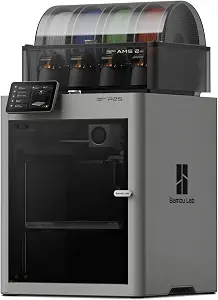
The P2S Combo receives the Best for Built-In Filament Drying label because its listed AMS feature includes filament drying at up to 65 °C. That makes drying a central point to examine if it is part of your intended routine. The label identifies a feature-based fit among these products; it does not establish that the P2S is best for every project or that its drying function will suit every filament or workflow. Check the product information for the exact offer and your material requirements.
There are other specifications to weigh alongside drying. The P2S prints up to 600 mm/s and has a PMSM Servo Extruder with Active Flowrate Compensation. These details may matter when you compare the capabilities you want, but they should not substitute for deciding what you actually need from a printer. A speed figure alone does not describe the outcome for a particular model, material or design, so avoid making it the only reason to choose this configuration.
Multi-color printing needs careful attention to the variant. The provided information says the P2S printer does not support multi-color printing and that the Combo version is required. Since this listing is identified as P2S Combo, verify the specific Black Friday package and its configuration before assuming it matches your intended color workflow. Do not rely only on a short headline if the bundle details are available for review.
The listed dimensions are 18 x 22 x 18 inches, and the listed weight is 46.3 pounds. Check whether that footprint works in the chosen location and whether you can manage the printer’s placement. On Black Friday, compare this model with the others by asking whether built-in filament drying, the stated speed, or the extrusion features solve a real need for you. If drying is your deciding priority, the P2S Combo’s listed feature gives you a clear point to investigate; if it is not, consider whether another model’s documented features better match your projects.
Key specs
Dimensions
18 x 22 x 18 inches
Weight
46.3 pounds
Print speed
prints up to 600 mm/s
Extrusion features
the PMSM Servo Extruder and Active Flowrate Compensation
AMS filament drying
built-in filament drying at up to 65 °C
Multi-color configuration
The P2S 3D printer does not support multi-color printing; Combo version required.
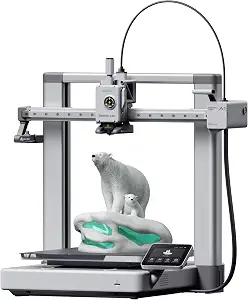
The A1 is the Best Budget pick in this guide, using the supplied editorial label rather than making a claim that it has the lowest price. Its listed features center on automatic calibration, active flow rate compensation and a quick-swap nozzle. Those details give shoppers who want to compare a different set of conveniences a concrete starting point. The right choice still depends on the exact Black Friday offer and how its configuration fits the work you have in mind.
The A1 takes care of its calibration processes automatically, according to the product information. That may be relevant if you would rather have calibration handled by the printer than make it a separate part of your setup routine. It also lists active flow rate compensation and a 1-Clip quick swap nozzle. Consider these features in relation to the tasks you expect to repeat; a feature is most useful when it addresses a step you actually care about, rather than simply adding another item to compare.
Multi-color printing requires AMS lite. The product information identifies the A1 Combo as an option or says AMS lite can be bought separately. If color printing is on your project list, check which configuration the Black Friday offer actually presents and whether the needed AMS lite is included. If you expect to print single-color designs, you can weigh the A1’s other listed features without treating multi-color as essential.
For placement, the listed dimensions are 21.76 x 20.83 x 12.87 inches and the listed weight is 22 pounds. Its acceleration is listed as 10,000 mm/s²; consider that specification alongside the printer’s other features, rather than treating it as a complete measure of print results. The A1 may suit shoppers whose priorities include automatic calibration and a quick-swap nozzle. During Black Friday, confirm the precise variant, compare its offer with your planned setup, and avoid assuming that the Best Budget label predicts a particular price.
Key specs
Dimensions
21.76 x 20.83 x 12.87 inches
Item weight
22 pounds
Acceleration
acceleration of 10,000 mm/s²
Multi-color printing
AMS lite required, get A1 Combo or buy AMS lite seperately.
Calibration
The A1 3D printer takes care of all the calibration processes automatically
Flow rate compensation
active flow rate compensation
Nozzle
The 1-Clip quick swap nozzle
Turn project ideas into a short list of priorities
Before opening multiple Black Friday listings, write down what you want the printer to help you make. A design that depends on several colors points toward checking the P1S’s AMS requirement or the A1’s AMS lite requirement; for the P2S, the information specifies that the Combo version is required for multi-color printing. A project centered on advanced filaments makes the P1S enclosure and its material guidance relevant. If filament drying belongs in your routine, the P2S Combo has built-in drying at up to 65 °C. These are different reasons to compare, not interchangeable claims.
Next, separate must-haves from appealing extras. If you will print only in one color, multi-color capability may not justify choosing a particular bundle. If you do not anticipate using filament drying, make sure that feature does not distract from a more important need. Likewise, automatic bed leveling on the P1S and automatic calibration on the A1 are separate listed features; compare the wording and decide which matters to you. This simple sorting step makes a Black Friday shortlist more useful than collecting model names without a project in mind.
Read bundle details as part of the printer choice
A model name does not by itself settle what a particular offer includes. The provided information ties the P1S’s up-to-16-color printing to connecting a Bambu Lab AMS, and says AMS lite is required for multi-color printing on the A1. It also describes the A1 Combo as an option or AMS lite as a separate purchase. For the P2S, it distinguishes the regular printer from the Combo version when discussing multi-color printing. These distinctions can change what you need to check before choosing a package.
During Black Friday, open the details for the exact variant rather than relying solely on the event label, a shortened product title or a prominent image. Confirm whether the configuration suits your intended setup, especially when an accessory or Combo designation is relevant. Do not infer that a required component is included just because color printing is mentioned in the listing. If the offer information does not make the configuration clear, resolve that uncertainty before deciding. This is a comparison habit, not an assumption about a seller’s stock, package contents or policies.
Match material plans to the stated guidance
Material choice can narrow the field quickly. The P1S listing identifies PLA, PETG, TPU, PVA, PET, ABS and ASA as ideal, PA and PC as capable, and carbon- or glass-fiber-reinforced polymer as not recommended. Preserve those distinctions when comparing it with the other printers: the information supplied here does not provide equivalent material guidance for the P2S Combo or A1. Do not fill that gap by assuming they support or exclude a material.
If a project depends on a particular filament, check the relevant product information before committing to a model. The P1S’s fully enclosed body is described as improving print performance for advanced filaments, but that statement does not override its explicit material guidance. Similarly, the P2S Combo’s built-in drying feature is a useful listed fact to consider, not a blanket promise about every material. Make your Black Friday comparison from the materials you actually intend to use and the qualifications stated for each model.
Weigh convenience against the routine you want
The everyday feature differences are worth considering in practical terms. The P1S lists automatic bed leveling; the A1 lists automatic calibration processes, active flow rate compensation and a 1-Clip quick swap nozzle. The P2S Combo lists a PMSM Servo Extruder and Active Flowrate Compensation, as well as drying through its AMS. Think about which step or capability matters in your own workflow rather than treating a longer feature list as an automatic advantage.
You might prioritize calibration-related convenience when you want that task handled automatically, or consider the A1’s quick-swap nozzle if that feature suits your plans. A project involving multiple colors raises a different question: which required AMS configuration matches the offer? If filament drying matters, examine the P2S Combo’s listed function and its stated limit. This Black Friday, compare relevant features side by side, but keep the decision tied to your intended tasks. The specifications describe features; they do not establish how a particular person will use them.
Check placement and compare the exact offer calmly
Plan where the printer will go before treating a listing as a candidate. The P1S is listed at 15.31 x 18.03 x 15.31 inches and 47.5 pounds; the P2S Combo at 18 x 22 x 18 inches and 46.3 pounds; and the A1 at 21.76 x 20.83 x 12.87 inches and 22 pounds. Use these stated dimensions and weights to think through the chosen space and moving the unit into position. Keep the source formatting rather than converting the measurements into another notation.
Then compare the Black Friday offer for the specific model and variant against your shortlist. Review the configuration, the features that matter to your projects and any listed requirements for multi-color printing. Do not assume a promotion is active, that a particular package is available or that a headline describes the full offer. If two models still seem plausible, identify the tradeoff you would actually notice: enclosure and material guidance, drying, or the A1’s listed convenience features. A deliberate comparison makes the decision clearer without depending on an unverified discount claim.
Make your Black Friday choice
A useful Bambu 3D printer shortlist connects a real project to a relevant feature, then checks the exact configuration. Consider the P1S Combo for its enclosure and stated material guidance, the P2S Combo when built-in filament drying is a priority, or the A1 when its automatic calibration and other listed features fit your routine. For Black Friday, verify variant details and required multi-color components before choosing; the event label alone is not a reason to buy. Let your materials, workflow and available placement make the final call.