Best Mini Pc Buying Guide — Black Friday Deals 2026
What do you need a mini PC to connect, store, and run in your everyday setup? That question is more useful than choosing by size alone. These three options span an entry-level processor with eMMC storage, a Ryzen-based system with wired networking and an expansion slot, and a model with DDR5 memory plus USB4 ports. Their configurations point to different priorities, so Black Friday is a good time to compare the exact listing and decide which trade-offs make sense for you. The labels here are editorial fit suggestions among these products, not measured awards. Before acting on a seasonal offer, check that the product name and listed specifications match the configuration you intended to buy.
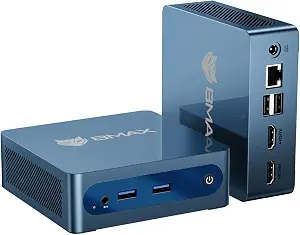
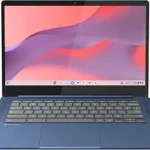
Best Budget is the editorial label for the Bmax Mini PC B1 Plus, whose listed setup centers on an Intel Celeron J3355 processor with a speed up to 2.5GHz, 6GB RAM, and 128GB eMMC. Those details make it a distinct choice for shoppers who want to weigh a simpler configuration against their actual computing needs. Think about the applications and files you expect to use before deciding whether the listed memory and storage are appropriate. Black Friday may bring many different configurations into view, but the label here does not imply a price, discount, or measured value; compare the exact product and specifications shown on the offer page.
The B1 Plus has dual HDMI ports, which gives you two HDMI connections to consider when planning a desk. Check your display arrangement and connection requirements before purchase instead of assuming that the presence of ports settles every compatibility question. Wireless details in the listing are Dual-Band WiFi5 (2.4G/5G) and Bluetooth 5.0. These are useful facts to compare with the network and accessories you plan to use. If wired networking or a particular peripheral connection is important, confirm that the listing documents what you need; do not infer an unlisted feature from the model name.
Its stated dimensions are 4.25 x 4.13 x 1.42 inches, so you can compare that exact footprint with the space available around your monitor or on your desk. The listing also says it supports Linux/Ubuntu, a relevant point if that is the operating system environment you intend to use. This mini PC could be worth considering when its documented processor, memory, eMMC storage, display connections, and software support line up with a modest, clearly defined setup. The Best Budget designation is a buyer-fit choice among the three featured products, not a claim about current cost. During Black Friday, check the exact listing and configuration before deciding that it meets your needs.
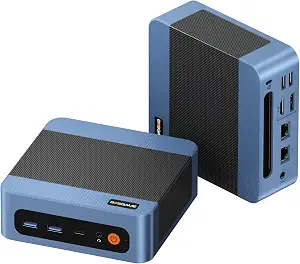
Best Overall is the editorial fit for the BOSGAME E5 11 Pro Mini PC because its listed configuration combines an AMD Ryzen 3 5300U processor with 8GB DDR4 dual-channel memory and a 256GB M.2 2280 SSD. The processor is specified as 4 Cores and 8 Threads, with a boost up to 3.8GHz and 6MB total cache. That gives shoppers several concrete details to compare with the requirements of their own everyday applications, rather than relying on the broad promise of a mini PC. For Black Friday, treat the complete configuration—not just the processor name—as the point of comparison.
Storage flexibility is a notable part of the listing. Alongside the 256GB SSD, the E5 has an extra empty internal M.2 2280 PCIe 3.0 slot. That gives buyers a defined expansion path to consider if they expect their locally stored files to grow; it does not mean the slot already contains another drive. For a work area where wired connections matter, the two 2.5 Gigabit Ethernet ports are a useful specification to weigh. The listing also identifies Windows 11 Pro as the operating system. Check that this is the edition you want before comparing a Black Friday offer with another configuration.
For a display and accessory plan, the listed outputs are an HDMI 2.0 port, a DisplayPort, and a Full-Function Type-C port. Map those connections to the equipment you intend to use, and verify any specific display requirements against the listing rather than assuming a port alone guarantees a particular setup. This model may suit a shopper looking for a middle-ground combination of processor, SSD, wired networking, and an identified storage expansion slot. The Best Overall label describes that balance within this guide; it is not a promise that the machine is right for every workload. On Black Friday, make sure the offer page still shows the E5 11 Pro and its listed memory and storage.
Key specs
Processor
AMD Ryzen 3 5300U processor (4 Cores, 8 Threads, up to 3.8GHz boost, 6MB total cache)
Memory and storage
8GB DDR4 dual-channel memory and a fast 256GB M.2 2280 SSD
Storage expansion
an extra empty internal M.2 2280 PCIe 3.0 slot
Video outputs
1x HDMI 2.0 port, 1x DisplayPort, and 1x Full-Function Type-C port
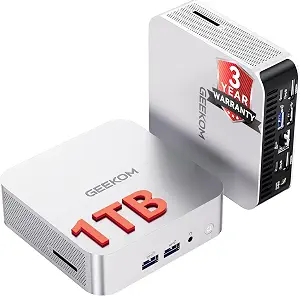
Best for USB4 connectivity is the editorial label for the GEEKOM A7 Mini PC. The listing names two USB4 ports, specified as up to 40Gbps and 8K, alongside a USB-C video output described as USB 3.2 Gen 2 Type-C with 4K@120Hz. Those details make the connection options a central reason to consider this model. Before a Black Friday purchase, compare the ports and their stated qualifications with the devices and display arrangement you plan to connect. The label points to a documented feature priority among these products; it does not establish measured superiority or guarantee compatibility with every accessory.
The A7 is listed with an AMD Ryzen 5 7535HS processor, 16GB DDR5 memory, and a 1TB SSD. Consider those specifications together when deciding whether the configuration aligns with your routine and how much local storage you want available. The figures describe the product listing, but they cannot determine on their own how a particular program or workflow will behave. If you have a specific application requirement, check that requirement separately and confirm that the offer page corresponds to this model and configuration. That extra check is especially useful when Black Friday listings place similarly named mini PCs side by side.
For video connections, the listed outputs also include two HDMI 2.0 ports, each described as 4K@120Hz, and the product has an SD Card Slot. These may matter if your setup depends on HDMI connections or card access, but match the listing to your devices rather than treating a port name as a universal fit guarantee. The GEEKOM’s appeal here is the combination of its stated processor, DDR5 memory, SSD capacity, and variety of documented connections. If those connection options are not a priority, compare the other products on their own merits. During Black Friday, verify the model name and every specification you are using to make your decision.
Key specs
Processor
AMD Ryzen 5 7535HS
Memory
16GB DDR5
Storage
1TB SSD
USB-C video output
1*USB3.2 Gen 2 Type C(4K@120Hz)
HDMI video outputs
2* HDMI 2.0(4K@120Hz)
USB4 ports
2*USB4 (up to 40Gbps,8K)
Card slot
SD Card Slot
Black Friday decisions start with the work at hand
Write down what you expect the mini PC to do before looking at seasonal offers. A computer for a short list of everyday tasks may call for a different configuration than one chosen around several specific applications, a large local file collection, or a particular desk connection plan. Translate those needs into checkable questions: which processor is listed, how much memory and storage does this configuration include, and which operating system or ports are documented? The Bmax, BOSGAME, and GEEKOM each give different answers, so there is no need to treat one headline specification as a complete buying decision.
Next, identify any requirements that are non-negotiable. If your setup depends on a particular display connection, wired network arrangement, operating system, or storage path, use the product details to narrow your options. Do not assume that a similar model name means an identical configuration. Black Friday offer pages can put different products or variants close together, so inspect the selected item and its specification text before placing an order. A compelling seasonal headline does not tell you whether the configuration fits your routine; your checklist does.
Finally, separate a desired feature from a required one. A port you will never use may not deserve priority over the storage or operating system you do need. By ranking needs in advance, you can make a calmer Black Friday comparison and avoid being drawn toward a configuration simply because one specification sounds impressive.
Read processor and memory as parts of one configuration
Processor names can help distinguish these products, but they are not a complete description of how a PC will serve you. The Bmax lists an Intel Celeron J3355 up to 2.5GHz; the BOSGAME lists an AMD Ryzen 3 5300U with its core, thread, boost, and cache details; and the GEEKOM lists an AMD Ryzen 5 7535HS. Compare those facts with the requirements of your own software rather than treating the names as a guarantee of a particular experience. If a program specifies a processor requirement, use that requirement as a separate check.
Memory deserves the same deliberate attention. The listed configurations are 6GB RAM for the Bmax, 8GB DDR4 dual-channel memory for the BOSGAME, and 16GB DDR5 for the GEEKOM. Those are different amounts and types, but a larger figure alone does not tell you whether a machine is the right choice for a given task. Consider what you keep open, what applications you intend to run, and whether their requirements are known. If you are unsure, look up the software’s documented needs before deciding.
Black Friday can make specification comparisons feel rushed. Keep a short note of the processor and memory you were considering, then verify both on the exact offer page. The purpose is not to chase the biggest number; it is to avoid paying attention to a headline while overlooking a configuration detail that matters to your planned use.
Make storage a question of capacity and next steps
The three listings describe notably different storage arrangements: 128GB eMMC on the Bmax, a 256GB M.2 2280 SSD on the BOSGAME, and a 1TB SSD on the GEEKOM. Think about where your documents, media, downloads, and other files will live. If you already rely on another storage location, your local capacity needs may differ from someone who prefers to keep more files on the computer. The right choice depends on your habits and the space your routine requires, not on a general rule that every shopper should choose the largest listed drive.
The BOSGAME also specifies an extra empty internal M.2 2280 PCIe 3.0 slot. That is a documented future expansion option to weigh, not installed storage. If you might use it, consider whether the slot’s existence matters to your plan and confirm any drive requirements before buying one. The Bmax and GEEKOM facts provided here do not describe an equivalent expansion slot, so avoid assuming that their storage can be expanded in the same way—or that it cannot be expanded at all.
During Black Friday, check that the storage figure and type appear for the exact product configuration you selected. A listing headline may emphasize a processor or seasonal offer while the storage details sit elsewhere on the page. Your decision should reflect both the capacity you need now and any explicitly documented route for adding storage later.
Plan the connections around actual equipment
Make a simple connection map before choosing among these mini PCs. The Bmax lists dual HDMI ports. The BOSGAME lists HDMI 2.0, DisplayPort, and a Full-Function Type-C port, along with dual 2.5 Gigabit Ethernet ports. The GEEKOM lists USB4 ports, USB-C video output, HDMI outputs, and an SD Card Slot. Those are useful distinctions, but a port list is only a starting point: check your display, network, and accessory requirements against the exact product documentation.
Be precise about video needs. The GEEKOM listing attaches qualifications to its USB-C and HDMI outputs, while the BOSGAME names its output types without the same resolution and refresh details in the facts here. Do not assume all ports perform identically or that a connection arrangement will work just because a port name appears. If a particular display mode matters, verify that requirement against the product listing and the display’s own specifications before buying.
The same care applies to networking and accessories. The BOSGAME’s dual Ethernet ports may be relevant to a setup that calls for more than one wired network connection; the Bmax documents wireless details; and the GEEKOM includes an SD Card Slot. Focus on the connections you will actually use. A Black Friday comparison is more useful when it checks practical fit rather than counting ports without context.
Use Black Friday checkpoints before choosing an offer
A seasonal listing should be evaluated as a specific configuration, not as a broad product-family name. Check the full model name, processor, memory, storage, and the ports or operating system that influenced your shortlist. If any detail is unclear or differs from what you expected, pause and verify the selected item before continuing. Do not assume a Black Friday headline represents every version associated with a product page.
Then compare the offer with your own notes. For example, a shopper drawn to the BOSGAME for its empty M.2 slot should confirm that the page identifies the E5 11 Pro and documents that slot. Someone considering the Bmax for Linux/Ubuntu support should check that detail on the chosen listing. A shopper choosing the GEEKOM for USB4 should verify the stated port information. These checks tie the decision to facts relevant to each product rather than to a general seasonal message.
Keep your final review practical: confirm the configuration, make sure it addresses your must-have needs, and check that no assumption about performance, compatibility, or expansion is standing in for a specification. Black Friday can be a useful moment to compare options, but the offer only makes sense if the exact item is the one you meant to select.
Make your Black Friday choice
The best mini PC for your setup is the one whose listed configuration fits your tasks, files, software, and connections—not necessarily the one with the most eye-catching specification. The Bmax brings a defined entry configuration with Linux/Ubuntu support; the BOSGAME combines its Ryzen processor, SSD, dual Ethernet ports, and documented empty M.2 slot; and the GEEKOM puts USB4 among a broad set of listed connections. Before completing a Black Friday purchase, use an exact-listing checklist: confirm the model, processor, memory, storage, operating system where specified, and the ports you need. Then make your choice based on those verified details and your own priorities.