Roku 50-Inch Select Series Smart TV 2026-4K (2160p) QLED TV
Amazon Ember 50″ QLED Series with Fire TV
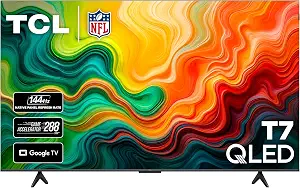
TCL 65 Inch T7 Series 4K 144Hz QLED Smart Google TV, 65T7
Best Qled Tv Buying Guide — Black Friday Deals 2026
A QLED label gives you a starting point, not a complete reason to buy. For a useful Black Friday shortlist, compare the details that affect your own setup: screen size, listed refresh rate, smart-TV system, named HDR formats, connections, and mounting dimensions. The three sets here span a compact living-room option, a feature-focused 50-inch choice, and a larger TCL with a higher listed refresh rate. Their specifications answer different questions, but they do not establish picture quality, current pricing, or whether a particular Black Friday offer is worthwhile. Check the exact model and variant attached to the offer, then weigh its documented features against your room, devices, and viewing habits.
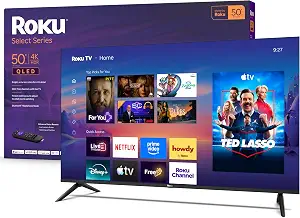
Roku 50-Inch Select Series Smart TV 2026-4K (2160p) QLED TV
Check Price on Amazon
For shoppers who want a 50-inch set with a straightforward group of listed essentials, the Roku 50-Inch Select Series Smart TV 2026-4K (2160p) QLED TV is the Best Budget choice in this guide. The label reflects its place in this selection, not a claim about its current price or a confirmed Black Friday discount. Its stated specifications include 4K resolution, a 60-hertz refresh rate, four HDMI ports, and Roku OS. Those details let you assess screen size, connection count, and platform preference before deciding whether an offer fits your budget.
At 50 inches, this model may suit someone comparing televisions for a room where that screen size is the intended choice. The facts provided do not specify viewing distance or room suitability, so measure your space and consider your seating before buying. Its 60-hertz refresh rate is a useful listed figure to compare with your own priorities; it does not, by itself, establish how motion will look in your content. If you are browsing Black Friday listings, keep the model name and the offered variant beside your notes so you can compare like with like rather than relying on an event label.
Roku OS may be a deciding point for a shopper who prefers that named operating system. Four HDMI ports help you count planned wired connections, while Bluetooth and Wi-Fi are the listed wireless technologies. The VESA mount standard is 200 x 100 mm, a specific detail to check against a mounting plan and the hardware information for the offer. No picture-quality results, included accessories, or current price are established by these facts. The Best Budget label is therefore a shortlist cue: compare the final offer and the documented features with your needs, and confirm any product details that matter to you before checkout.
Key specs
| Resolution | Resolution 4K |
| Refresh rate | Refresh Rate 60 hertz |
| Screen size | Screen Size 50 inches |
| HDMI ports | Total Number of HDMI Ports 4 |
| Operating system | Operating System Roku OS |
| Wireless connectivity | Wireless Technology Bluetooth, Wi-Fi |
| VESA mount | VESA Mount Standard 200 x 100 mm |
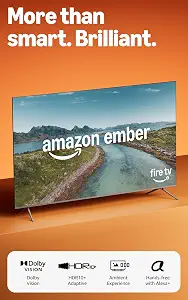
Amazon Ember 50″ QLED Series with Fire TV
The Amazon Ember 50-inch QLED Series with Fire TV earns the Best Overall label in this guide because its listed features address several common decision points without relying on a single specification. It has a 4K QLED display, Dolby Vision and HDR10+ Adaptive, four HDMI inputs, Wi-Fi 6 support, and a quad-core processor. That collection gives shoppers concrete details to compare when considering a main-room television. The label is an editorial fit among these three options, not a claim that it has been tested or is best for every household.
The display and HDR details may be useful starting points if you already know which formats your viewing sources use. Dolby Vision and HDR10+ Adaptive are named here; the listing does not establish how a particular program or connected device will use them. Four HDMI inputs give you a clear connection count to compare with the equipment you intend to attach. Before a Black Friday purchase, make a list of those devices and check whether the exact offer is for this model and variant. The connection count is helpful planning information, not a guarantee that every setup will work as expected.
Fire TV is the named platform, and the set also supports AirPlay for sharing content from compatible devices. Built-in sensors wake the display when you enter, while a switch electronically disconnects the microphones. Those specific features may matter if you value presence sensing, sharing, or a physical privacy control; decide whether they fit your routine rather than treating them as universal advantages. Wi-Fi 6 support and the quad-core processor are also listed, but the supplied details do not establish real-world speed or responsiveness. Around Black Friday, compare the exact product listing and offer alongside these features, and leave unlisted performance questions open.
Key specs
| Display | 4K QLED display |
| HDR | Dolby Vision and HDR10+ Adaptive |
| Processor and Wi-Fi | Wi-Fi 6 support and a new quad-core processor |
| Presence sensing | Built-in sensors wake the display when you enter |
| HDMI inputs | four HDMI inputs |
| AirPlay | Use AirPlay to share content from compatible devices to your TV |
| Microphone privacy | a switch that electronically disconnects the microphones |
TCL 65 Inch T7 Series 4K 144Hz QLED Smart Google TV, 65T7
Check Price on Amazon
The TCL 65 Inch T7 Series 4K 144Hz QLED Smart Google TV, 65T7, is Best for a Higher Listed Refresh Rate. Its 144-hertz figure is the highest refresh-rate specification among the products in this guide, making it a clear comparison point for shoppers who place that listed feature high on their checklist. This is an editorial label based on the supplied specifications, not a measured performance verdict. The set also lists a 65-inch screen, 4K resolution, and Google TV, so it gives shoppers a larger-screen option with a different platform from the two 50-inch models.
The 65-inch screen size is the key practical planning detail here. Consider where the television would sit, how much wall or furniture space is available, and whether that size suits your viewing setup; the supplied facts cannot determine fit for your room. The 144-hertz refresh rate may attract shoppers comparing listings for that specification, but it does not establish the experience with a particular source or game. During Black Friday browsing, check the exact model designation and offer variant, then compare the listed refresh rate with your actual priorities instead of assuming the larger number alone settles the decision.
The TCL lists Dolby Vision, HDR10, HDR10+, HLG, and Open HDR, giving you several named formats to check against the content and devices you plan to use. It also has four HDMI ports, Bluetooth and Wi-Fi, and a VESA mount standard of 400 x 300 mm. Google TV is its stated operating system. These details can help you map connections, platform preference, and installation requirements before buying; they do not establish compatibility with every source or mounting setup. Treat the Best for a Higher Listed Refresh Rate label as a way to find this option in a Black Friday comparison, then verify the exact listing and any details important to your installation.
Key specs
| Screen size | 65 inches |
| Resolution | 4K |
| Refresh rate | 144 hertz |
| HDR formats | Dolby Vision, HDR10, HDR10+, HLG, Open HDR |
| Operating system | Google TV |
| HDMI ports | 4 |
| Wireless technology | Bluetooth, Wi-Fi |
| VESA mount | 400 x 300 mm |
Make room for screen size before comparing offers
Screen size is easiest to judge as part of a room plan rather than as an isolated figure. The Roku and Amazon Ember models are each listed at 50 inches, while the TCL is listed at 65 inches. Those are useful distinctions for narrowing a shortlist, but the facts do not say which size will suit a particular seating distance or room layout. Measure the available space, consider where people will sit, and decide whether a larger display is actually a priority before browsing Black Friday offers.
Think through placement as well as the screen itself. A television intended for a stand and one intended for a wall may call for different checks, so compare the mounting information with your plan. The Roku specifies a VESA mount standard of 200 x 100 mm, and the TCL specifies 400 x 300 mm. No mounting dimension is provided here for the Amazon Ember, so do not assume one; consult the exact product listing if that detail matters. These steps help you avoid choosing on screen size alone, without making unsupported claims about fit.
During Black Friday, keep the model and variant associated with each offer visible in your notes. A similar screen size or QLED wording is not enough to confirm that two listings describe the same product. Match the offer to the name and specifications you intended to compare, then check the physical details relevant to your room. That approach is more dependable than letting a sale banner set the shortlist for you.
Use refresh-rate figures to frame the comparison
The listed refresh rates create a simple distinction in this group: the Roku is specified at 60 hertz, and the TCL is specified at 144 hertz. No refresh-rate figure is included in the provided facts for the Amazon Ember, so shoppers who regard that specification as essential should check its exact listing rather than fill in the blank. The numbers are useful for comparing the stated products, but they do not tell you how every type of content will look or establish an overall picture-quality ranking.
Start by asking whether refresh rate is a leading priority for your viewing. If it is, the TCL’s listed 144 hertz gives you a specific figure to investigate, while the Roku’s 60 hertz offers a different point of comparison. If it is not central to your use, other details—such as size, operating system, HDR formats, or connection count—may be more useful for your shortlist. Avoid treating one specification as a shortcut for the whole television.
Black Friday listings can make quick comparisons tempting, so record the exact model name beside each refresh-rate figure. Check that the offer refers to the intended variant and do not assume that similar product names guarantee identical specifications. The Amazon Ember’s other listed features may still make it worth considering, but the supplied facts do not answer its refresh-rate question. Confirm that detail if it affects your decision, and compare only what the listing actually establishes.
Match HDR names with the sources you plan to watch
HDR format lists are most useful as compatibility questions. The Amazon Ember names Dolby Vision and HDR10+ Adaptive. The TCL lists Dolby Vision, HDR10, HDR10+, HLG, and Open HDR. Those are the formats stated for the two products; the Roku facts supplied for this guide do not name HDR formats. That does not establish that any particular television cannot handle a format. It means shoppers should consult the exact listing when a specific HDR detail is important.
Before a Black Friday purchase, consider the content and devices you expect to use, then check whether the formats named in a product listing are relevant to that plan. A longer list is not proof of better results for every program, nor does it guarantee that a source will use every listed format. The provided specifications do not describe brightness, tone mapping, or how a given stream will appear, so avoid inferring those qualities from format names alone.
Keep the distinction between a documented format and a viewing outcome clear. If HDR support is a deciding factor, verify the exact model and variant in the offer and look for the format information you need. If it is not, do not let the longest list distract from practical considerations such as screen size, platform, and inputs. This lets you use HDR information as one meaningful checkpoint without turning it into a blanket verdict.
Pick a platform and connection plan that fits
The three named operating systems are Roku OS on the Roku Select Series, Fire TV on the Amazon Ember, and Google TV on the TCL. Platform preference is personal, so identify which interface you would rather use instead of assuming one is universally simpler. The product facts do not establish an app catalogue, voice-control behavior, or general ease of use for any of them. For a Black Friday comparison, stick to the platform details actually listed and confirm any specific service or function that matters to you in the offer information.
Connection counts offer another practical checkpoint. The Roku lists four HDMI ports, the Amazon Ember lists four HDMI inputs, and the TCL lists four HDMI ports. Count the devices you intend to connect and compare that plan with the stated inputs. The supplied facts do not describe every port’s capabilities, so do not infer support for a particular connection standard from the count alone. The Amazon Ember also lists AirPlay for sharing content from compatible devices, while Bluetooth and Wi-Fi are listed for the Roku and TCL.
Consider these details together rather than choosing on platform name alone. The Ember’s presence sensors and microphone-disconnect switch may be relevant if those particular features matter in your household; the fact sheet says the sensors wake the display when you enter and the switch electronically disconnects the microphones. The Ember also lists Wi-Fi 6 support and a quad-core processor, without a stated real-world performance result. Compare your own needs with those documented points, then verify the exact Black Friday listing.
Keep a Black Friday offer comparison grounded
A Black Friday label does not by itself tell you whether an offer is a good match. First identify the product and variant, then compare its documented specifications with your shortlist. For these models, useful anchors include screen size, resolution, refresh-rate information where supplied, named HDR formats, operating system, and connections. The facts in this guide do not establish current prices, discounts, stock, or the terms attached to an offer, so those details must be checked on the listing you are considering.
Write down the features you genuinely need before comparing event offers. You might prioritize a 50-inch set, a particular operating system, a higher listed refresh rate, or a specified number of HDMI inputs. Separate essential requirements from preferences, and do not let a specification that sounds impressive substitute for a feature you actually need. If a detail is not established in the supplied information—such as a performance outcome or a particular compatibility question—confirm it on the exact product page before deciding.
Finally, check that the model name and specification set remain consistent as you move from shortlist to checkout. Black Friday pages may group products or variants in ways that are not obvious from a headline, so compare the precise item presented with the one you researched. Make sure the physical fit and mounting details suit your plan, and review the offer information for yourself. This keeps the event useful as a time to compare options without assuming that a promotion is active or that every listed deal represents value.
Make your Black Friday choice
The best QLED choice here depends on which listed details matter most in your home. The Amazon Ember combines named HDR formats, AirPlay, presence sensing, a microphone-disconnect switch, and four HDMI inputs; the Roku offers a 50-inch 4K set with Roku OS and four HDMI ports; the TCL pairs a 65-inch screen with a listed 144-hertz refresh rate and several named HDR formats. None of those facts alone proves a universal winner. As Black Friday offers appear, verify the exact model and variant, compare the details you need, and leave unconfirmed performance or pricing assumptions out of the decision.