Best Touchscreen Laptop Buying Guide — Black Friday Deals 2026
When would touching the screen make a laptop easier to use, rather than simply adding a feature to the spec sheet? That is the useful question behind a touchscreen laptop search. The options here span Windows and ChromeOS, a compact Chromebook configuration, and larger screens with different display details. Start by deciding which software environment suits your routine, then weigh screen characteristics, memory, storage, and supporting features against the work you expect to do. For Black Friday, compare the exact listed model and configuration with those priorities in hand. A tempting offer is only relevant if its display, operating system, and capacity fit your everyday needs.
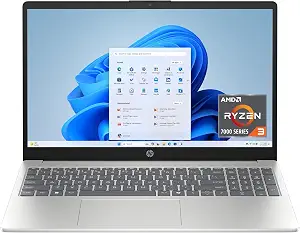
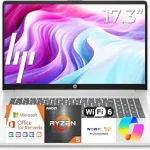
HP 15.6 inch Laptop, HD Touchscreen Display, AMD Ryzen 3 7320U, 8 GB RAM, 256 GB SSD, AMD Radeon Graphics, Windows 11 Home, Natural Silver, 15-fc0399nr
HP 15.6 inch Laptop, HD Touchscreen Display, AMD Ryzen 3 7320U, 8 GB RAM, 256 GB SSD, AMD Radeon Graphics, Windows 11 Home, Natural Silver, 15-fc0399nr (ASIN B0DWMLHYJ5)
Best Overall is the editorial fit for shoppers seeking a Windows touchscreen laptop with a defined, everyday-use configuration. This HP has a 15.6-inch HD touchscreen and runs Windows 11 Home. Its AMD Ryzen 3 7320U processor has four cores and eight threads, with a maximum boost clock of up to 4.1 GHz. Those details help describe the setup, but they do not establish how it will perform with any particular workload. Think about the programs and tasks you rely on, and whether this processor and the rest of the listed configuration suit them.
Memory is 8 GB LPDDR5-5500 MT/s, onboard, while local storage is a 256 GB PCIe NVMe M.2 SSD. Consider those as separate decisions: memory is a specification to weigh against your expected multitasking, while storage is where you will keep local files and installed software. The listing does not specify upgrade options, so do not assume the configuration can be expanded later. If you expect to keep a substantial collection of files on the laptop, check whether the stated capacity fits your plan before choosing it.
The listed weight is 3.5 pounds, and wireless connectivity includes Realtek Wi-Fi 6 (2×2) and Bluetooth 5.3. That gives shoppers concrete details to consider when comparing a laptop they may carry or connect to wireless devices. The product information does not give a battery-life figure, so avoid treating battery runtime as a known advantage or disadvantage. For Black Friday, compare the exact 15-fc0399nr configuration and its listed specifications with your shortlist, rather than assuming an offer refers to a different HP configuration. This Best Overall label is a buyer-fit recommendation among these options, not a claim of measured superiority.
Key specs
Processor
AMD Ryzen 3 7320U (up to 4.1 GHz max boost clock, 4 MB L3 cache, 4 cores, 8 threads)
Memory
8 GB LPDDR5-5500 MT/s (onboard)
Storage
256 GB PCIe NVMe M.2 SSD
Operating system
Windows 11 Home
Wireless connectivity
Realtek Wi-Fi 6 (2×2) and Bluetooth 5.3 wireless card (supporting gigabit data rate)
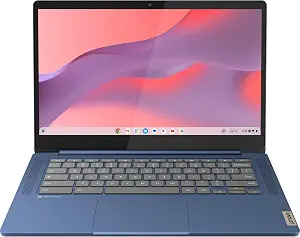
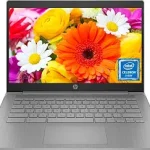
Best Budget is the editorial choice here for shoppers whose priorities include a touchscreen Chromebook and a stated 13.5-hour battery-life figure. The Lenovo has a 14-inch Full HD touchscreen and runs Google Chrome OS. Its processor is a MediaTek Kompanio 520 octa-core, with four A73 cores at 2.0GHz and four A53 cores at 2.0GHz. Those are useful details to compare with your intended routine, but specifications alone cannot tell you how a particular set of tasks will feel. Consider whether Chrome OS is the environment you want before focusing on processor names.
This configuration has 4GB RAM and 64GB eMMC storage. The relatively specific capacities make it especially important to think through what you expect to keep on the device and how you use memory during your usual work. Do not assume extra capacity or an upgrade path: neither is established by the provided listing details. If you keep files locally, check that 64GB eMMC aligns with that plan; if your everyday tasks involve several activities at once, take the 4GB RAM specification into account too. These are distinct considerations, not interchangeable measures.
Wi-Fi 6, 11ax 2×2 and Bluetooth 5.1 are listed for wireless connectivity. The stated battery life is 13.5 hours; treat that as the product’s listed figure, not a promise that every routine will produce the same runtime. For Black Friday, compare the exact Chromebook configuration, including its operating system, screen resolution, memory, and storage, with the alternatives you are considering. The Best Budget label reflects a practical fit among the products in this guide, not a claim about a sale price or a measured ranking. It may suit someone who wants Chrome OS and a Full HD touchscreen, provided the listed capacity meets their needs.
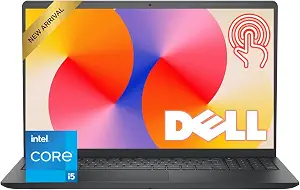
Best for a 120Hz touchscreen display is the editorial label for this Dell, based specifically on its listed display specification. The 15.6-inch Full HD touchscreen has a 120Hz refresh rate, an IPS panel, and an anti-glare finish. If those screen details matter to your shortlist, compare them as a group rather than treating the word touchscreen as the whole story. The listing also identifies a 13th Gen Intel Core i5-1334U processor with ten cores and speeds up to 4.60GHz. These are configuration facts, not a guarantee of a particular result with your apps.
The Dell has 8GB DDR4 RAM and a 512GB SSD, and it runs Windows 11 Home. Before choosing, consider whether those stated memory and storage capacities fit the work and files you expect to keep on the laptop. Its FHD 1080p webcam is another concrete feature to weigh if video calls are part of your routine. The product information does not specify every detail a shopper might want, so base the decision on what is actually listed instead of filling gaps with assumptions.
The stated battery life is up to 9 hours. Keep the qualification “up to” in view when comparing it with other priorities; a listed estimate is not a guarantee for every pattern of use. For Black Friday, verify that the offer you are examining is for this 15.6-inch touchscreen configuration, including its 120Hz, IPS, anti-glare display and the listed internal specifications. The label here points to that particular screen feature among the options, not to a measured comparison or a promise that it is the right choice for everyone. Choose it when the display details, Windows 11 Home, and stated capacities align with your own checklist.
Key specs
Processor
13th Gen Intel Core i5-1334U processor with 10 cores and speeds up to 4.60GHz
Memory
8GB DDR4 RAM
Storage
512GB SSD
Display
15.6-inch Full HD touchscreen with a 120Hz refresh rate, IPS panel, and anti-glare finish
Operating system
Windows 11 Home
Webcam
FHD 1080p webcam
Battery life
up to 9 hours of battery life
Decide what you want a fingertip to accomplish
Touch can make sense when you expect to interact directly with items on the screen: selecting a control, moving through a page, or working with content where pointing at the display feels natural. Before shopping, name the moments in your routine when that would genuinely help. If you mainly expect to use a keyboard and pointing device, touchscreen capability may be less important than other characteristics. This is a preference question rather than a claim that one input style is universally better.
Next, look beyond the touchscreen label to the screen details provided for each option. The HP is described as having an HD touchscreen, the Lenovo as a 14-inch Full HD touchscreen, and the Dell as a 15.6-inch Full HD touchscreen with a 120Hz refresh rate, IPS panel, and anti-glare finish. Those descriptions give you different points to weigh; they do not establish how a screen will look in every setting. In a Black Friday comparison, keep the display resolution and, where listed, panel and finish alongside the touch feature. That helps you compare the actual screen configuration you want, not just a shared label.
Choose the operating system that fits your plans
The operating system is a useful early filter because it is central to the software environment you will use. The HP and Dell run Windows 11 Home, while the Lenovo runs Google Chrome OS. Think about the applications and routines you expect to rely on, then check their requirements through information relevant to those applications; the product details here do not establish compatibility for any particular program. Starting with this question can narrow your choices before you weigh processor specifications.
The two Windows options have different listed processor and capacity details, so do not treat their shared operating system as evidence that they are otherwise alike. The HP lists an AMD Ryzen 3 7320U, 8 GB onboard LPDDR5 memory, and a 256 GB PCIe NVMe M.2 SSD. The Dell lists a 13th Gen Intel Core i5-1334U, 8GB DDR4 RAM, and a 512GB SSD. The Lenovo’s Chrome OS configuration lists a MediaTek Kompanio 520, 4GB RAM, and 64GB eMMC. For Black Friday, use the full configuration to judge fit; a platform name alone cannot tell you whether the storage and memory match your plans.
Treat memory and file space as separate questions
Memory and storage describe different parts of a configuration, so compare both against your own habits. Memory is the amount listed for handling active work, while storage is the capacity listed for keeping files and software locally. A shopper who expects to juggle multiple activities may focus closely on the memory figure; someone who plans to store many files on the laptop may give local capacity particular attention. These are planning prompts, not promises about how a computer will perform.
The listed combinations are 8 GB onboard LPDDR5-5500 MT/s with a 256 GB PCIe NVMe M.2 SSD for the HP; 4GB RAM with 64GB eMMC for the Lenovo; and 8GB DDR4 RAM with a 512GB SSD for the Dell. The memory types and storage descriptions are not identical, so preserve the exact details when comparing. None of these records establishes an upgrade path. Before a Black Friday purchase, ask whether the stated capacity works for your expected files and routines as configured. If you are unsure, check your current storage use and the requirements of the work you want to do rather than assuming you can add capacity later.
Use the supporting details to narrow close choices
Features beyond the display can be useful tie-breakers when two configurations otherwise fit your priorities. The HP lists a weight of 3.5 pounds, Realtek Wi-Fi 6 (2×2), and Bluetooth 5.3. The Lenovo lists Wi-Fi 6, 11ax 2×2 and Bluetooth 5.1. The Dell includes an FHD 1080p webcam. Consider which of these listed details has a practical role in your routine: carrying weight, wireless connectivity, or a specified webcam. The available information does not describe every port or accessory, so do not infer unlisted details.
Battery claims also need careful reading. The Lenovo lists 13.5 hours, while the Dell says up to 9 hours; the HP information provided here gives no battery-life figure. Keep the wording and qualifications attached to each number, and avoid assuming that a listed estimate guarantees the same result for every user. These specifications can help frame questions, but your needs determine their importance. For Black Friday, compare them only after confirming the display and operating system you want. A useful tie-breaker is one that connects to a real priority, not simply the longest feature list.
Check the full configuration before a Black Friday purchase
A Black Friday offer should be evaluated against the exact product configuration you intended to buy. First match the product name and model information shown on the listing to the item in your shortlist. Then confirm the operating system and touchscreen details: the HP is a 15.6-inch HD touchscreen laptop running Windows 11 Home; the Lenovo is a 14-inch Full HD touchscreen Chromebook; and the Dell has a 15.6-inch Full HD touchscreen with a 120Hz refresh rate, IPS panel, and anti-glare finish. This step helps prevent a general family name from standing in for the precise version.
After the screen and platform match, verify memory, storage, and the supporting features that affected your decision. Check that the HP listing says 8 GB onboard LPDDR5-5500 MT/s and a 256 GB PCIe NVMe M.2 SSD; that the Lenovo says 4GB RAM and 64GB eMMC; or that the Dell says 8GB DDR4 RAM and a 512GB SSD, as applicable. Do not assume that an offer has a discount, that every listing is identical, or that a feature from one configuration belongs to another. Compare the displayed offer and exact specifications directly, then decide whether the configuration still meets your priorities.
Make your Black Friday choice
A sensible touchscreen laptop choice begins with fit: decide whether direct screen interaction matters, select the operating system that suits your routine, and check the actual memory, storage, and display details. The HP, Lenovo, and Dell offer distinct configurations, so no single label replaces that comparison. Before completing a Black Friday purchase, use an exact-listing checklist: match the product and configuration, confirm the screen and operating system, review the capacities and relevant supporting features, and compare the offer shown for that precise item. Choose the one that satisfies your needs as listed, not an imagined upgrade or an assumed promotion.