Best Good Laptop Buying Guide — Black Friday Deals 2026
A good laptop is the one whose operating system, screen, memory, storage and connections suit the work you actually do. These three options cover different priorities: a Windows configuration with 16GB RAM, a Chromebook with a stated battery-life claim, and a Lenovo with several listed port types. The Best Overall and Best Budget labels are editorial choices among these listings, not measured awards or promises about price. During Black Friday, compare the exact product and configuration shown in the offer with the details here. A deal banner alone cannot tell you whether the operating system or ports fit your routine.
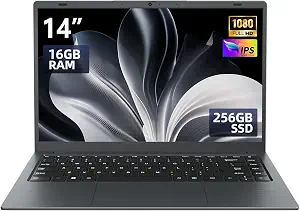
The 14-inch student configuration is the Best Overall pick in this group for shoppers who want a Windows-style laptop choice with 16GB RAM and a 256GB SSD listed together. Those capacities give you concrete details to weigh against your own mix of documents, browser use and locally stored files. Its listed processor is a Pentium 6500Y processor (7W), so compare that exact component with any application requirements you need to meet rather than assuming that memory or storage alone determines suitability. The screen is a 14.0-inch IPS FHD (1920×1080) display, a defined resolution and panel description to consider when deciding whether the size fits your desk, bag and typical viewing distance.
The listing also specifies a 5000mAh battery (7.4V), two USB 3.2 Gen1 ports and a webcam cover. The battery figure is a capacity specification, not a stated runtime, so it should not be read as a promise about hours away from an outlet. The two USB ports may be relevant if your routine involves connecting more than one USB device; check whether the other connections you rely on are listed for this exact configuration before buying. The webcam cover is a direct privacy-related feature, while the FHD screen and memory and storage figures help define the configuration without implying anything about unlisted features.
For Black Friday, use Best Overall as a shortlist cue, not as proof that this laptop is the right choice for every buyer or the best-priced option. Confirm the product identity and the listed processor, memory, storage and screen on the offer page, then consider whether its ports match your accessories. The 14-inch display and two USB 3.2 Gen1 ports make practical checkpoints for someone balancing screen size with a simple USB setup. If you need a specific operating system, application or connection, verify that requirement against the exact listing rather than inferring it from the product name. The recommendation is based on the supplied configuration details, not on a performance test or a claim about a current promotion.
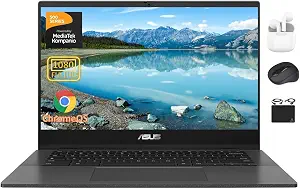
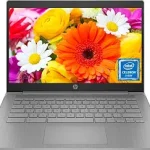
ASUS Chromebook Laptop Student Business 2024 (ASIN B0DFDWN8RT)
This ASUS Chromebook is the Best Budget pick among the three listings, with the label describing its place in this guide rather than a confirmed price advantage. It runs Chrome OS and combines a 14-inch FHD anti-glare display with a resolution of 1920 x 1080 pixels. That gives shoppers who prefer Chrome OS a clear starting point for checking whether their everyday tasks and required software belong in that environment. The listed processor is an 8-Core MediaTek Kompanio 520, while memory is 4GB RAM. Consider that memory figure in light of your own working habits and the applications you expect to use; do not treat the processor description as a substitute for checking software requirements.
The storage listing is 128GB (64GB eMMC+64GB Card). Read the combined description carefully and decide whether the stated configuration aligns with how you keep files and use your laptop. Its battery claim is up to 15-hour battery life. Because the listing says “up to,” treat it as a qualified claim rather than a guaranteed duration for every routine. An integrated privacy shutter is specified for the webcam, and wireless connectivity is listed as a Wi-Fi 6 and Bluetooth 5.3 combo. These details can help you decide whether the privacy feature and wireless standards matter to your setup, but they do not establish unlisted connections or conditions for battery use.
During Black Friday, compare the exact Chromebook configuration and its stated operating system with your software needs before focusing on an offer. The Best Budget label does not mean that a particular sale price is active, or that the device will cost less than the other choices. Check that the listing you are considering identifies the same memory and storage arrangement, then ask whether Chrome OS suits your normal tasks. The anti-glare FHD display, integrated webcam privacy shutter and qualified battery-life claim offer useful decision points for shoppers who value those stated features. If your work depends on a particular desktop application, file workflow or accessory, verify its requirements independently instead of assuming compatibility from the product name.
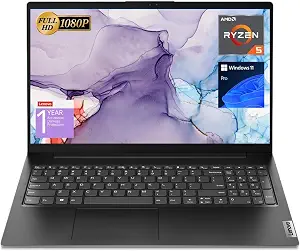
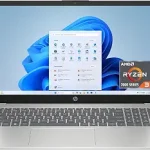
The Lenovo V15 is the Best for Port Variety choice in this guide, a label grounded in its listed selection of connection types rather than a claim that it has every port a shopper could need. The specification names one USB 3.0 Type-A, one USB 2.0 Type-A, one USB Type-C, one HDMI and one RJ45 connection. If you regularly connect several kinds of equipment, compare that list with the actual plugs and wired-network needs in your setup. Check each connection by name before buying; a port count alone does not show whether a particular accessory or workflow will suit the laptop.
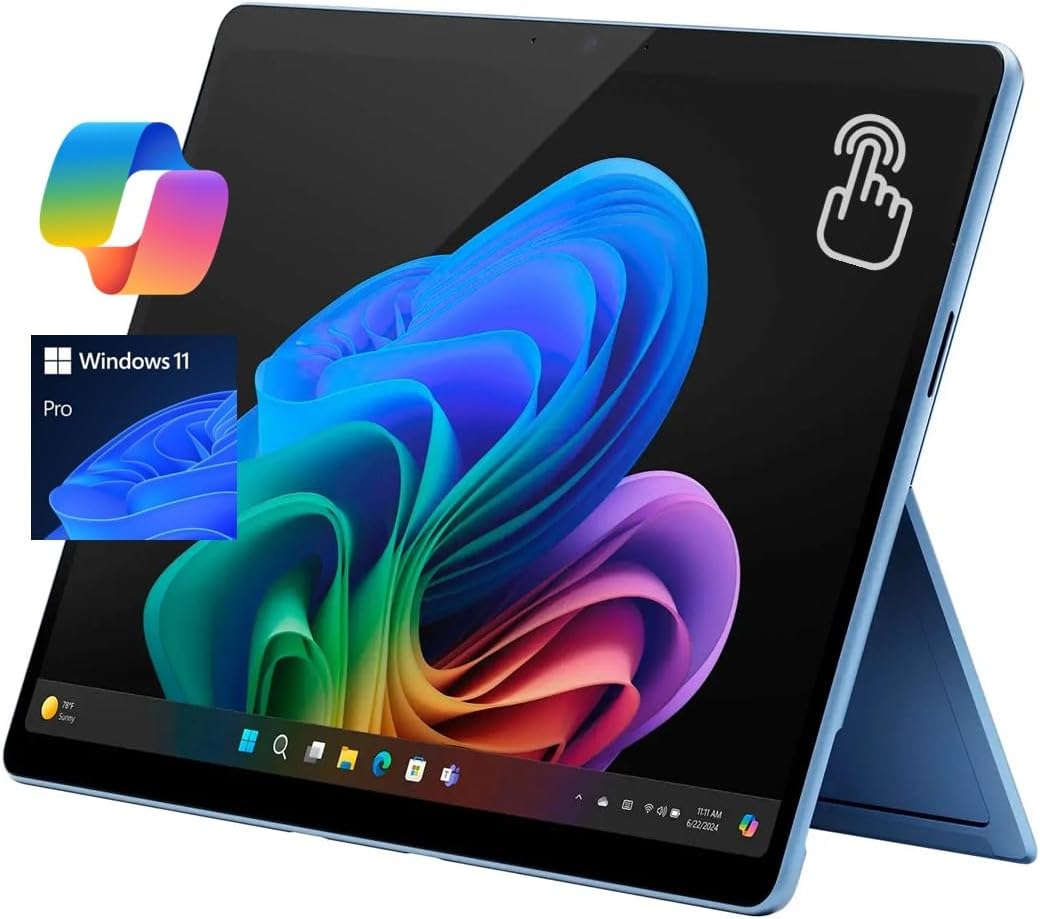
The configuration pairs a 15.6-inch diagonal, FHD (1920 x 1080) display with an AMD Ryzen 5 5500U Processor. The processor listing specifies six cores, twelve threads, an 8MB L3 cache, a 2.1GHz clock speed and up to 4.0GHz Turbo. It also lists 16GB RAM and a 512GB PCIe NVMe M.2 Solid State Drive. These are useful comparison points when you have application requirements or local-file needs to consider. Windows 11 Pro is the stated operating system, and the keyboard is specified as a numeric keyboard, which may be relevant if number entry is part of your routine.
For Black Friday, verify that the offer refers to this Lenovo V15 configuration and check the complete specification list, especially if you are choosing it for a particular connection. Its Best for Port Variety label is an editorial way to distinguish the supplied ports from the other guide priorities; it is not a measured judgment about speed, build quality or overall value. The larger stated display size, processor details, memory, SSD and Windows 11 Pro are separate considerations, not reasons to overlook software or accessory requirements. Compare the exact configuration shown at checkout with the needs you wrote down, and do not assume that a different listing or variant shares these details.
Key specs
Display
15.6″ diagonal, FHD (1920 x 1080)
Processor
AMD Ryzen 5 5500U Processor (6 Cores, 12 Threads, 8MB L3 Cache, Clock Speed:2.1GHz, up to 4.0GHz Turbo)
Memory
16GB RAM
Storage
512GB PCIe NVMe M.2 Solid State Drive
Operating system
Windows 11 Pro
Connectivity
1 x USB 3.0 Type-A, 1 x USB 2.0 Type-A, 1 x USB Type-C, 1 x HDMI, 1 x RJ45
Keyboard
Numeric Keyboard
Start with the work your laptop must accommodate
Before comparing Black Friday offers, describe an ordinary day with your laptop. List the applications you need, whether you rely on a particular operating system, how many files you keep locally and which accessories you connect. Those answers make the supplied specifications easier to interpret. The Lenovo lists Windows 11 Pro, while the ASUS identifies Chrome OS; if your workflow depends on a specific software environment, make that a first filter. The student configuration lists a Pentium 6500Y processor (7W), but no operating system is supplied in the facts here, so do not infer one from its name.
Next, separate essential requirements from preferences. A numeric keyboard may matter to frequent number entry; a webcam cover or integrated privacy shutter may influence your preference for a physical privacy feature. Port types may be essential if you connect external equipment directly, while screen size may be a comfort choice. For Black Friday, keep this short requirement list beside the offer page. A discount message does not resolve a mismatch in software, connections or configuration. Check the exact model and variant against your non-negotiables first, then use optional features to choose among listings that still meet them.
Read memory, storage and processor as separate clues
Memory and storage answer different shopping questions. RAM is part of the listed system memory; storage describes the capacity and type presented for keeping files. The student laptop and Lenovo each list 16GB RAM, while the ASUS lists 4GB RAM. Storage is described as a 256GB SSD for the student model, a 128GB (64GB eMMC+64GB Card) arrangement for the Chromebook, and a 512GB PCIe NVMe M.2 Solid State Drive for the Lenovo. Consider how much room you want for local files and which applications you expect to keep available, rather than treating one number as a complete measure of suitability.
Processor names and descriptions also need their own check. The listings give a Pentium 6500Y processor (7W), an 8-Core MediaTek Kompanio 520 and an AMD Ryzen 5 5500U with its stated core, thread and clock details. These specifications do not by themselves establish how a laptop will perform with your particular workload. If an application publishes requirements, compare those requirements with the exact configuration before a Black Friday purchase. Where the listing leaves a detail unspecified, avoid filling the gap with an assumption. A careful comparison connects each component to a real need: application requirements, file habits or the kind of work you plan to do.
Decide which screen belongs in your workspace
Screen descriptions can help narrow a shortlist, but the right choice depends on where and how you use a laptop. The student option has a 14.0-inch IPS FHD (1920×1080) screen, and the Chromebook lists a 14-inch FHD anti-glare display with 1920 x 1080 pixels. The Lenovo specifies a 15.6-inch diagonal, FHD (1920 x 1080) display. Think about whether you favor a more compact listed screen size or a larger one, and whether the anti-glare description is important for your intended setting. The provided facts do not state brightness, touch capability or other screen qualities, so check those separately if they are requirements.
Black Friday listings may draw attention to a display while leaving other configuration details easy to overlook. Confirm the exact model and screen description, then check whether the operating system and connections also suit your routine. A screen that looks suitable on paper cannot answer whether a required application will work or whether your accessories can connect. If you regularly use the laptop in more than one place, consider your own practical priorities: viewing area, portability preference and where you will position the device. Use the supplied size and resolution as comparison facts, not as a guarantee of comfort for every user.
Make a connection checklist from your own accessories
Write down the devices and cables you expect to use, then match their connection needs to the facts. The Lenovo listing names USB 3.0 Type-A, USB 2.0 Type-A, USB Type-C, HDMI and RJ45. The student model specifies two USB 3.2 Gen1 ports. The ASUS facts provide Wi-Fi 6 and Bluetooth 5.3 combo connectivity, but do not list wired ports here. That difference in available detail is not proof that an unlisted feature is absent; it means the exact product listing needs checking if a connection is important to you.
Wireless details and physical ports serve different parts of a setup, so consider each one independently. If you need a wired network connection, check that the exact configuration identifies the connection you require. If you use a wireless device, confirm its requirements and compare them with the stated wireless information where provided. During Black Friday, avoid selecting a laptop only from a broad product title or a cropped offer description. Read the full specification for the exact variant, and make sure the connector names match your equipment. This simple check can prevent a tempting offer from becoming an unsuitable configuration for your desk or travel routine.
Judge privacy and battery statements by their wording
Privacy and battery information can be useful, but the wording matters. The student laptop lists a webcam cover, and the ASUS Chromebook lists an integrated privacy shutter. Both are stated physical privacy features; neither fact establishes other security functions. The ASUS also carries an “up to 15-hour battery life” claim. Keep the “up to” qualification attached to that figure, rather than treating it as a promise of the same runtime in every situation. The student laptop’s 5000mAh battery (7.4V) is a capacity specification, not a stated number of operating hours.
The Lenovo facts supplied here do not include a battery-life statement or a webcam privacy feature. That does not establish that either feature is absent; it means shoppers who consider them essential should verify the exact listing. For Black Friday, compare the full product details rather than inferring runtime or privacy from a headline. Think about whether you mainly use a laptop near power, whether you expect to move between locations, and whether a physical webcam cover or shutter matters to you. Match those preferences to explicit claims, keeping their original qualifications intact and avoiding assumptions about conditions the listing does not specify.
Make your Black Friday choice
A sensible Black Friday shortlist starts with requirements, not a banner: operating system, applications, memory and storage needs, screen preference, and the ports or privacy details you actually value. The student configuration, ASUS Chromebook and Lenovo V15 each present a different set of facts to compare. Use the labels in this guide as editorial signposts among these three options, not as proof of universal fit or live pricing.
Before deciding, verify the exact product and variant on the offer page and compare its specifications with your checklist. Confirm the configuration rather than assuming a promotion applies to every version, and do not let an unqualified headline replace the details that matter to your routine. The best choice is the one whose stated features meet your needs and whose remaining unknowns you have checked.