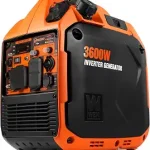
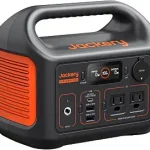
EF ECOFLOW Solar Generator Delta 3 Classic with 220W Solar Panel, 1024Wh (ASIN B0FRMQPZF6)
Best Solar Generator Buying Guide — Black Friday Deals 2026
A solar generator purchase is easier to judge when you start with the devices you want to run, then compare stored energy, AC output, connections, and the included panel. Those details answer different questions: capacity describes the energy reserve, while output helps define which equipment can be connected within the unit’s limits. A bundled panel is another part of the configuration, not a promise about how quickly it will recharge in every setting. This guide considers three Jackery and EF ECOFLOW options with different capacities and stated outputs. During Black Friday, treat the event as a time to compare listings, not as proof that an offer is exceptional. Check the exact model and bundle, then decide whether its documented features match your plans.
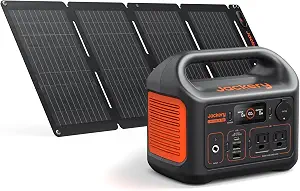
Jackery Solar Generator 300 and 40W Solar Panel (ASIN B0G429L5B4)
The Jackery Solar Generator 300 and 40W Solar Panel earns the Best Budget label among these options. Its stated 292Wh capacity and 300W AC output point to a compactly specified setup in this comparison, but the label is an editorial distinction, not a claim about price or a current discount. The unit’s rated output is 300W, with a 600W peak surge. Check both figures against the equipment you intend to connect; the peak figure should not be read as the regular output available for ongoing use. Since the capacity is also part of the decision, consider how many devices you plan to power and how their requirements fit the stored-energy reserve.
Its listed connections are two AC outlets, a 100W USB-C PD port, two USB-A ports, and a 120W car port. That selection gives you several connection types to compare with the devices and charging methods in your plan. Count the connections you expect to use at once and check that each device’s plug and power requirements correspond to a listed port. The product specifies LiFePO4 chemistry, another concrete detail to consider when comparing listings. The included panel is a 40W Solar Panel; treat its presence as bundle information, and look at the actual offer for the precise configuration rather than assuming anything about charging time in your conditions.
For Black Friday, this Jackery may be worth considering if the output and capacity figures align with a focused set of planned uses. Examples might include choosing which smaller devices to prioritize, or deciding whether the listed mix of AC, USB, and car connections is relevant to your setup. Those are planning prompts, not promises about runtime or compatibility. Check the complete offer for the exact product name, panel inclusion, and listed specifications before making a decision. If the equipment you want to run requires more than the stated regular AC output, this is not the configuration to choose on the strength of its peak figure alone. The Best Budget label helps identify its role in this guide; it does not imply a particular Black Friday price.
Key specs
Capacity and AC output
292Wh,300W AC
Ports
2 AC outlets, a 100W USB-C PD port, 2 USB-A ports, and a 120W car port.
Rated and peak output
300W rated output (600W peak surge)
Battery chemistry
LiFePO4 chemistry
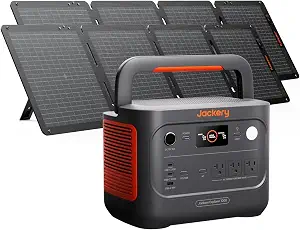
Jackery Solar Generator 1000 v2 and 2x100W Solar Panel,1024Wh LiFePO4
Jackery Solar Generator 1000 v2 and 2x100W Solar Panel,1024Wh LiFePO4 (ASIN B0D66VD3X4)
The Jackery Solar Generator 1000 v2 and 2x100W Solar Panel is the Best Overall pick in this group for shoppers seeking a substantial stated capacity alongside a clearly specified AC output. Its 1024Wh capacity and 1,500W AC output give you two different figures to consider: the first is the stored-energy amount, and the second is the stated AC power level. The product also lists a 3,000W surge peak. Keep that surge figure distinct from the regular output when checking the requirements of equipment you might connect; it is not a substitute for matching the device’s ongoing demand to the unit’s stated output.
This bundle includes 2 * 100W Solar Panels, so the panel configuration is part of the offer you are evaluating. The listing also specifies a 10ms UPS switchover, a detail that may matter if you are considering the unit for equipment where transfer behavior is relevant. It does not, by itself, settle whether the unit suits a particular device or setup; check that equipment’s requirements and the exact listing details. At 23.37 Lbs, its stated weight is useful to consider before choosing where it will be stored or used. Think through the practical path from storage to your intended setup rather than treating capacity alone as the whole decision.
For Black Friday, this model’s Best Overall label is an editorial choice among the products here, not a claim of measured superiority or a market-wide award. Compare the exact offer with the same model and panel configuration, and verify what the listing says is included. A larger capacity figure may appeal if your plan involves several devices or longer periods away from a wall outlet, but it cannot establish runtime without the devices’ demands and other conditions. Make a short list of the equipment you hope to connect, its power needs, and whether UPS switchover matters. Then use the stated capacity, output, surge, panel bundle, and weight to decide whether this configuration is a sensible match.
Key specs
Capacity
1024Wh
AC output
1,500W AC output
Surge output
3,000W surge peak
UPS switchover
10ms UPS switchover
Weight
23.37 Lbs
Included solar panels
2 * 100W Solar Panels
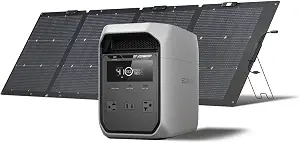
EF ECOFLOW Solar Generator Delta 3 Classic with 220W Solar Panel, 1024Wh
EF ECOFLOW Solar Generator Delta 3 Classic with 220W Solar Panel, 1024Wh (ASIN B0FRMQPZF6)
The EF ECOFLOW Solar Generator Delta 3 Classic with 220W Solar Panel, 1024Wh is the Best for Higher AC Output choice here. It specifies 1800W output and 3600W surge, alongside a LiFePO4 battery. The output figures make this option relevant to shoppers whose equipment calls for a higher stated AC output than the other configurations in this guide. Still, the correct choice depends on the requirements of the equipment you will connect. Treat the surge figure separately from the regular output, and verify the device’s needs rather than relying on a headline number alone. Its 1024Wh capacity is another part of the decision, but it does not establish a particular runtime.
The bundle includes a 220W bifacial solar panel, and the listing states that recharging takes 5.8 hours with a 220W solar panel. Keep that stated qualification attached to the claim: it is not a guarantee for every location or setup. For your decision, check the panel named in the actual offer and whether the configuration matches what you expect to receive. This model also lists 100W USB-C output and an automatic switch to battery in under 10ms. Those details can be useful if USB-C output or transfer behavior matters to your plan, but confirm the connected device’s own requirements before treating either as decisive.
During Black Friday, the Best for Higher AC Output label describes why this model stands out within the supplied choices; it is not a test result or a promise that it is best for every shopper. Compare its exact configuration against the Jackery options, paying attention to your equipment’s required output, the capacity you want, and the included panel. If transfer behavior is on your checklist, note the under-10ms statement and assess whether it applies to your intended setup. If solar recharging is central, read the 5.8-hour statement with its 220W panel qualification and check the offer carefully. The useful question is not which listing has the most appealing headline, but which documented combination addresses your needs.
Key specs
Output
1800W output (3600W surge)
USB-C output
100W USB-C Output
Battery
LiFePO4 Battery
UPS transfer
automatically switches to battery in under 10ms
Solar recharging
Recharge in just 5.8 hours with a 220W solar panel.
Solar panel
220W bifacial solar panel
Sketch your power plan before browsing
Begin with a practical list of the equipment you want to power, rather than choosing a generator by capacity alone. Note whether each item would use AC, USB-C, USB-A, or a car connection, and check the equipment’s stated power requirements. This turns the product details into a real comparison: the Jackery 300 lists two AC outlets, USB-C PD, USB-A, and a car port, while the other listings provide different stated features. Do not assume that a port count by itself confirms compatibility or that every connection can serve every device.
Next, separate the question of output from the question of stored energy. The regular AC output helps you check whether a device’s demand fits the stated limit; capacity helps you think about the energy reserve for your planned use. Surge figures have their own role and should not replace the regular output when you are evaluating ongoing operation. During Black Friday, this simple equipment-first plan can prevent a headline capacity or output figure from distracting you from the requirements that matter. If you cannot confirm those requirements, pause and check the device documentation before deciding.
Keep capacity and output in separate columns
A useful shortlist records capacity, regular output, and surge output in separate places. The Jackery 1000 v2 and EF ECOFLOW Delta 3 Classic each list 1024Wh, but their stated AC outputs differ: the former specifies 1,500W and the latter 1800W. Their surge figures are also distinct. Those figures help describe the products, but they cannot tell you how long a particular load will run. That depends on the devices and conditions of use, so avoid translating a capacity figure directly into a promised runtime.
Compare those figures with the actual equipment you expect to use, and keep a margin for the possibility that your plan changes. If your intended load calls for more regular output than a model states, do not treat a higher surge number as a workaround. If your needs are modest, you may not need to prioritize the highest listed output. For Black Friday, make the comparison against your own list rather than assuming a larger headline specification automatically makes the better purchase. Capacity, output, and surge answer separate questions; choose according to the one your use case actually raises.
Treat the panel as part of the bundle
Included solar panels are meaningful configuration details, but the panel name alone does not establish how a unit will recharge in your circumstances. The Jackery 300 bundle names a 40W Solar Panel; the Jackery 1000 v2 includes 2 * 100W Solar Panels; and the EF ECOFLOW bundle lists a 220W bifacial solar panel. The EF ECOFLOW listing also gives a 5.8-hour recharge statement with a 220W solar panel. Preserve that qualification when comparing it with another offer, and do not assume the same result under different conditions.
On Black Friday, inspect the exact product variant and confirm which panel the offer includes. Similar-looking listings or names can make it easy to compare different configurations as though they were identical. Decide whether the included panel is important to your plan, then verify that the listing describes the panel you expect. If recharging is a central part of your decision, use the available panel information as a starting point and check any additional details you need on the actual offer. Avoid treating a bundle title as a substitute for confirming its contents.
Check connections and transfer details against your setup
Ports should be matched to actual devices, not counted as a general measure of usefulness. The Jackery 300 gives particularly specific port information, including a 100W USB-C PD port and a 120W car port. The EF ECOFLOW lists 100W USB-C output. Check whether the device you plan to connect uses the relevant connection and whether its requirements fit the stated output. Do not infer that a listed port supports a use beyond the information provided, and remember that connector shape and power needs both matter.
Transfer behavior is a separate consideration from port selection. The Jackery 1000 v2 specifies a 10ms UPS switchover; the EF ECOFLOW says it automatically switches to battery in under 10ms. If this detail matters for equipment you plan to connect, review the equipment’s own requirements and the product listing before relying on it. A stated transfer time is useful information, but it does not independently establish suitability for every device or use. During Black Friday, put transfer behavior on your checklist only if it affects your decision, then compare the wording for the exact model.
Compare the offer, not the event label
Black Friday is a shopping occasion, not evidence that a listed price is a bargain. Because no current prices or discount details are established here, compare the exact offer you find with the specific product configuration you intend to buy. Confirm the model name, stated capacity and output, and whether the named solar panel is included. For a bundle, make sure you are comparing the same generator-and-panel arrangement rather than a product name that sounds similar.
Before checkout, revisit the questions that shape your shortlist: Does the regular output match your equipment’s requirements? Is the capacity appropriate for the use you have in mind? Do the listed ports correspond to your devices? Is a panel included, and does the listing describe the configuration you expected? Does a UPS or transfer detail matter to your setup? Keep the answer tied to the actual offer and its displayed information. That method makes a Black Friday comparison more useful than reacting to an event badge or a product label without checking what is being offered.
Make your Black Friday choice
The right solar generator depends on the work you want it to do, not on one standout number. Use the Jackery 300 as the Best Budget option in this guide when its listed capacity, output, ports, and 40W panel fit your plan. Consider the Jackery 1000 v2 as Best Overall among these choices, with its stated capacity, AC output, included panels, and UPS detail in view. The EF ECOFLOW Delta 3 Classic is the Best for Higher AC Output pick here, with its own panel and transfer information to verify. For Black Friday, compare the precise bundle and offer, then buy only when its documented features fit your equipment and expectations.